Jack Briant Reporter

Tuesday, November 10, 2020

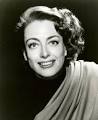
Susan Hayward

Our Star for December was one of Hollywood’s top film stars in the 1950’s. Her personal life remarkably paralleled her most outstanding screen roles. Her own struggles with alcohol and marriage may have helped her stellar onscreen performances. Her tribulations also led her to religion which we will allude to later. Born Edythe Marrenner in Brooklyn in 1917 she was the youngest of three of Swedish and Irish ancestry. Growing up during the depression Edythe was drawn to the movies and acting began for her in childhood. In High School she was named “Most Dramatic” by her class graduating in 1935. At age 18 she and her flaming red locks auditioned for the part of Scarlett O’Hara in Gone With the Wind. As we all know she didn’t get the part, but her audition was so impressive she landed a studio contract anyway and her new stage name (nom de guerre) Susan Hayward. The ensuing years had her in small supporting roles but that would change for the 5-time Oscar nominated actress. My Foolish Heart 1949, With a Song in My Heart 1952, I’ll Cry Tomorrow 1955 and capped off by her Academy Award for I Want To Live in 1958 based on the life of death row inmate Barbara Graham. As we back up a bit biology interfered in her rise to stardom when she became pregnant with twins sired by actor Jess Barker and such was the time when the studio forced her to marry in order to maintain her contract. Their marriage was a tempestuous one fueled by alcohol. Jess and Susan had fraternal twins Gregory and Timothy born in 1945. They divorced in 1954 but by then her star had her at the pinnacle of her success. Inner demons though found her trying suicide the very next year. Recovery in the marriage department wasn’t too far away as she wedded Floyd Chalkley in 1957. Floyd was a former Federal Agent and it resulted in a happy marriage for them both. They lived in Georgia away from the bright city lights of Hollywood. In 1964 as we alluded to earlier Susan and her husband were baptized Catholic by Father McGuire in Pittsburgh. She had met the priest in China and promised him if she ever converted it would be him to baptize her. Floyd Chalkley died in January of 1966 and Susan in mourning did little in the way of acting for the next few years and moved to Florida as Georgia reminded her too much of her beloved husband. Before her conversion to Catholicism Susan was a proponent of astrology and was a devotee of Hollywood’s famous Astrologer to the Stars, Gregarious Aquarius. A true believer he convinced her to only sign contracts at 2:47 am and so she set her alarm clock at 2:45. After being diagnosed with brain cancer in 1973, she would die suffering a seizure in her Hollywood home on Mach 14, 1975 at age 57 she was buried next to Chalkley. Speculation was that she developed cancer from radioactive fallout from atomic bomb tests while filming in Utah with John Wayne. Lending credence to the that theory had Agnes Moorehead, Pedro Armendariz, Director Dick Powell and John Wayne himself all perishing from cancer also. By 1980 of the entire cast and crew of 220 according to People magazine 91 had contracted some form of cancer and 46 died from the disease. Susan Hayward has her Star on the Hollywood Walk of Fame.

Saturday, May 23, 2020

Lon Chaney Senior


Our star for May was born April 1, 1883 his parents named him Leonidas Frank Chaney. Both of his parents, Emma Alice and Frank H. were deaf mutes and because of that the young Chaney became skilled in pantomime. It was a talent that would serve him well throughout his albeit short life.  When his mother Emma became bedridden Lon left school and while caring for her and his siblings entertained them with his repertoire of pantomime stories. 

Around 19 years of age Lon began his Vaudevillian stage career and in 1905 he met and married 16-year old singer Cleva Creighton who within a year bore him their first and only child Creighton later of course to be known as Lon Chaney Junior. Five years later    the young family moved themselves to California. 

The strains of performing and marital discord crept into their relationship and it was in April of 1913 at the Majestic Theater in downtown LA that Cleva would publicly ingest mercuric chloride in an attempted suicide but it only ruined her singing voice not her death.  Lon was incensed and filed for divorce but the ensuing scandal and embarrassment forced him to leave the theater and he was relegated to doing bit parts for Universal Studios until 1917. A show business purgatory if you will. 

During this time Lon’s skill with makeup caught the attention of the husband-wife director team of Joe DeGrasse and Ida May Park who began to give him substantial roles in their films. It was they who encouraged him to play the macabre characters he would become so famous for. As his life became more stable Lon married Hazel Hastings a woman he knew from the Kolb and Dill tour he had managed while still married to Cleva. Once they married they were able to gain custody of Creighton now 10 years old. Not much is known about this second marriage except that it was characterized as  “solid”. 

Lon left the studio in 1917 because although he was a featured performer his salary didn’t reflect it. During that period especially during the silent era actors had little power over the studio heads but convinced of his innate talent Lon was determined to strike out on his own nonetheless.  That first year wasn’t easy for a character actor but in 1918 Lon succeeded in the film Riddle Gawne and his efforts were finally recognized. In 1919 playing “The Frog” in The Miracle Man his acting and makeup talent were on full display. The film grossed a fortune at the time of 2 million plus and what seemed like a meteoric rise Lon was now America’s top character actor. The studio anxious to capitalize on Chaney’s new stardom and cranked out a bevy of films in short succession Victory, Treasure Island, The Penalty, Oliver Twist and Flesh and Blood. But Lon was just warming up.  

The year was 1923 and Lon Chaney became a household name starting with The Hunchback of Notre Dame, He Who Gets Slapped, (with a young Joan Crawford) The Unholy Three, (which he would later reprise as his only talkie in 1930) Laugh Clown Laugh, and maybe his piece de resistance The Phantom of the Opera. It was in this film in 1925 that Lon creating his own makeup wherein he glued back his ears with spear gum, put cotton in his cheeks and took fish skin and glued it to his ears and forehead to get the effect he wanted to distort his nose all served to give the most grotesque and horrifying image the screen had ever seen. Adding more chills to the film the studio made sure there were no stills issued before the film and the strategy worked as audiences screamed in the theaters when Lon removed his mask in the climatic scene with Mary Philbin.  He urged Philbin’s character “Never look beneath my mask” The quote later emerged “Never look but wanting to see”  

As Quasimodo in the Hunchback and then in the Phantom Lon portrayed two grotesque figures but he was able to simultaneously elicit the emotions of sympathy and horror from audiences.  There was no one at the time that could generate the pathos Lon could.  Keep in mind that this man did this in silence with music as his only accompaniment.  It was in 1939 that Charles Laughton would reprise the talking version and some say did the better portrayal although he had the benefit of sound, time and a better cast.  

While researching Lon Chaney I found an old video of him in an excerpt of his only talkie The Unholy Three where he is playing a ventriloquist and that led to the discovery that in addition to his pantomime skills he was also an excellent baritone, dancer and sharp witted comedian. Certainly talents he honed while working on stage as a Vaudevillian performer. Lon and his second wife Hazel shied from the Hollywood limelight and he did little promotion work for the studio probably due in part due the embarrassment he suffered because of Cleva’s suicide attempt.   Lon’s star shone when the cameras rolled but he withdrew from the limelight once filming had wrapped. 

In 1926 while under contract to MGM he gave a memorable performance as a hard-nosed Marine drill instructor in Tell it to the Marines, which of course earned the Corps deep respect and remained with him until he passed away.  He surely had the countenance for the part and as Lon never considered handsome but his rugged look in that film became synonymous for those that followed him that played that particular role in later years.  Lon was not your typical actor either he was always willing to share his experience with aspiring actors and crew. Lon Chaney was a genuine mentor for those that sought him out.  

While filming Thunder in 1929 Lon developed pneumonia later diagnosed as lung cancer and the artificial snowflakes made of cornflakes, which got caught in his throat, only exacerbated the situation. Although the medical profession tried aggressive treatment Lon succumbed on August 30, 1930 at just 47. His wife Hazel would pass in 1933. Lon Chaney would describe his skill, as “Extraordinary Characterization” Lon Chaney would later be called the Godfather of Horror Actors. 

In 1957 James Cagney would portray Lon in A Man of a Thousand Faces. Generally considered only a loose factual account of Chaney’s life but it did give some insight to the man that gave birth to a genre that is a multi billion-dollar industry today. You will find this account once in a great while on TCM. Look for Chaney’s silent films as they also have him in their library as well. 

Lon Chaney Senior was truly one of films pioneers. His son Creighton who would later change his screen name to Lon Chaney Junior would see success as The Wolfman but never really be the innovator his father was.  


Saturday, May 16, 2020

My Sponsor


To those familiar with this blog know that members of AA rely on a sponsor. This is a person you choose to confide the more intimate character defects and shortcomings of your personal life in an attempt to ameliorate and when possible make amends to the people that you’ve harmed during your active life. In the first five years of my sobriety the man that was most instrumental in helping me maintain my alcohol free life since 1989 left this earth on Thursday morning May 14th. I was blessed to have chosen him and before his untimely passing we got a chance to talk at length about what we were grateful for and especially our continued long-term sobriety. 

This man brought a tough as nails attitude in his AA method but fortunately I bought into it. I didn’t always like what he had to say but instead of doing it John’s way I chose AA’s way instead. He would often say: “John take the cotton out of your ears and put it into your mouth.” These words I will never forget. Thanks Nic old friend. 

Having just a short time to reflect on my friend’s death has made me think a little bit more about my own mortality. Not in a morbid way but that AA idiom that rings true. “We only have today.” I like to think I am grounded each day but after my sponsor’s passing the gravity of his life and my own seem to carry more weight now if you can pardon the pun. Nic didn’t suit everyone’s taste but his long list of men he sponsored will be saying prayers that he entered their lives just as I will that he entered mine. 

Trying to get sober and stay sober without someone to talk to is like getting into a rowboat in a swift running stream without oars. You might get to the other embankment but why not use the tools that can help make the treacherous journey just a bit more navigable? I chose to keep my mouth shut when Nic and my program told me to and I am so glad I did because my way got me drunk and for me AA and my sponsor got me sober. And as I have said many times here if there is another protocol that works for you use it don’t go on railing against Alcoholics Anonymous. As the fictional character Charlie Chan said in a movie: “Any powder that kills fleas is a good powder.” DDGTM Nic would often say to me and for you earthlings if you think you have a problem with alcohol you probably do. 

Stay sober my friends and I know you are all over the World now please spread the word you might save someone.  


Saturday, May 9, 2020

Mantan Moreland & Eddie "Rochester" Anderson


For June I chose to focus on two Black actors that the Golden Age featured in stereotypical roles but both made the best of their opportunities. The first was Mantan Mooreland who joined a carnival at age 14 and then a medicine show the very next year but juvenile authorities intervened and put a stop to his adventures. Mantan began his show biz career in what was called the “Chitlin Circuit” which was the black performers version of vaudeville and after a decade he teamed with a comic Benny Carter and their routine became known as “indefinite talk” whereby each would start a sentence only to be interrupted by the other. (Say, have you seen…?” “I saw him yesterday. He was at…” “I thought they closed that place down!”) In one of the Chan films Benny and Mantan performed their skit. There timing was perfect and chemistry was obvious onscreen but at the time it mattered little.

By 1936 Mantan was performing in films usually as a porter, waiter or a bootblack but he was too funny to be shunted aside by the other white actors in the B films and his roles began to expand while he was at the low rent Monogram studio. During this time uncharacteristically Mantan struck up a screen friendship with white actor Frankie Darro unusual as most black actors were relegated to solo comic relief. Moreland’s elevated status got him prominence in the Charlie Chan series as the detective’s constant frightened chauffeur and with each passing film the hilarity escalated and by 1949 his Birmingham Brown character was referred to as Chan’s assistant. Mantan reprised his role 15 times and lasted through 2 non-Asian Chan actors.

He was also featured in the all black MGM film Cabin in the Sky and a lesser-known King of the Zombies wherein he steals the film from the lesser known white stars. When the scene shifts to the jungle and Mantan and his costars hear drums they ask “what’s that?” he says: “I don’t know but it ain’t Gene Krupa.” I laughed loudly.   When the Civil Rights movement took root Mantan roles dried up but later he reemerged with roles in Spider Baby in ’64 and cameos in Enter Laughing in ’68 and The Comic in ’69.  He was back in demand and appeared on Love American Style in 1970, and that same year in Watermelon Man. On The Bill Cosby Show he revived his “indefinite talk” routine and introduced it to a whole new generation. Mantan Moreland was often reviled later during the more politically correct period but watch him he was just flat out very funny. Revisionist history fanatics might disagree. Mantan was a groundbreaker and is not given the credit for opening doors for black actors that followed.  He died at age 71 from a brain hemorrhage. 


 Next up is Eddie “Rochester” Anderson who also moved the needle for black actors. He was born into a show business family, which gave him a leg up on Mantan.  His father was a minstrel performer and his mother of all things a tightrope walker in the circus. Eddie entered show business with his brother Cornelius as a song-and-dance team. He began his film career in 1932 at age 27 in a film called What Price Hollywood? He too appeared in a stereotypical role as a valet. Five years later though in 1937 his fortunes change literally forever when the part he was designated for was a one-shot appearance as a railway porter nicknamed “Rochester” on the radio’s hit series The Jack Benny Program. His raspy voice and overwhelming audience response were dramatic and it led to his teaming with Benny until Jack’s death in 1974. In fact he costarred with him in films: Man About Town ’39, Buck Benny Rides Again ’40, Love Thy Neighbor ’41 and The Meanest Man in the World in ’42. His role continued on Jack’s television series until 1965. His partnership as Jack’s know-it-all butler was a big hit with audiences, which served to elevate how black actors were perceived at the time. Eddie Anderson is also not given the credit he well deserves for this turning point in film and television history. In fact he achieved an equal footing with his white costars. In the late 60’s in a Jack Benny special he was invited to reprise his servant role once more to which Eddie quipped: “But boss we don’t do that any more!”

In a movie role that I particularly love Eddie plays opposite Roland Young in the final installment of the Topper trilogy in 1941 costarring Joan Blondell. Again Anderson plays a chauffer but kills it with his reactions to the “ghost” played by Joan. Eddie got top billing in ’43’s Cabin in the Sky (Mantan also appeared) and did a few more movies in the 40’s until his television career began to bloom.  In his personal life Eddie was a shrewd businessman parlaying his radio and film earnings into profitable real estate investments and was one of the wealthiest black entertainers at the time. He died at age 71 of heart disease. Mantan Moreland and Eddie “Rochester” Anderson were two black American actors that helped remove the demeaning roles such as Stepin Fetchit* (Lincoln Perry) played before them.

*Lincoln Perry aka Stepin Fetchit who I thought was annoying more than funny especially in movies like Charlie Chan in Egypt actually parlayed his shtick into millions even though his lavish lifestyle later had him bankrupt. Next up I think I will feature Anna May Wong.  
 Eddie 
 Mantan 

Wednesday, January 15, 2020

Audie Murphy


The banner reads: The most decorated U.S. soldier of World War II. At War’s end he was just 21 and the stats read that he had killed 240 German soldiers, was wounded himself 3 times and was decorated with 33 medals including the Nation’s highest The Congressional Medal of Honor. When it was time for a Hollywood career it would be James Cagney that beckoned him to the silver screen.

Murphy was born Hunt County, Texas June 20, 1925 in a ramshackle house to a sharecropper who sired 12 children but unfortunately his father had no plan as how to nourish the ever burgeoning brood. Audie the 7th of the 12 to the rescue as he hunted small game including rabbits which he supplemented to feed his siblings and mother. Audie claimed it was this hunting for family sustenance that helped him attain his deadly accuracy with the rifle during the war years.  By age 15 his father had flown the coop permanently and his beloved mother died a year later. When news of Pearl Harbor rang out Audie tried to enlist in the Army, Navy and Marine Corps but all 3 turned him down for being underage and underweight. His sister falsifying his birth document by a whole year Audie was accepted by the Army in June of 1942.

After extensive training it was February 1943 and he was on his way to North Africa for active duty and active it became. When his division moved to Sicily Audie contracted malaria but he distinguished himself in battle nonetheless.  When his unit moved again to Southern France and his best friend was killed by German skullduggery Murphy became enraged and annihilated the enemy that had just killed pal Lattie Tipton. He commandeered a German machine gun attacking enemy positions gaining his first citation the Distinguished Service Cross. Murphy would also receive medals from France and Belgium but the story of the Medal of Honor is recounted here. The German 19th Division held a position in the Colmar Pocket a region in the central Alsace region in France. After the enemy had lit the American M10 tank destroyer on fire Murphy told his men to retreat to the woods in safety but Audie mounted it alone and began firing the .50 caliber machine gun while the tank was ablaze and for an hour stood atop the tank killing 50 Germans. Wounded in the leg he remained with his men and for his gallantry he received the prestigious Medal of Honor. 

When Murphy returned home a hero LIFE magazine put the baby faced soldier on the cover of their July 16th issue and it was this notoriety that gave James Cagney the inspiration to invite Audie to Hollywood to begin his acting career which at first had him struggling for years in B pictures.  What elevated him to star status was he decided to write his autobiography entitled To Hell and Back, which he penned in 1949. Described as a shy man and ever self-effacing while writing his account of his war exploits Audie was careful to not to engage in any hyperbole so he wouldn’t be accused of hyperventilating over his war hero status.  Nonetheless it became a National bestseller. That same year he was named Time magazine’s Man of the Year.  Spurred on by the novels success he desperately wanted to portray himself in the movie and the Studio agreed. The film became Universal’s highest grossing film in 1955 and stayed that way until 1975 when the blockbuster Jaws would unseat it from it’s ranking.  Murphy’s real life best friend Charles Drake starred alongside him adding more comfort to his role.  Audie’s filmography listed 44 features mostly westerns and in addition maybe unbeknownst to some became a successful country music songwriter and featured artists like Dean Martin, Jerry Wallace and Harry Nilsson would record his music. 

David Niven in his biography stated that Audie would sleep with a loaded gun next to him and on occasion when startled he would fire off a round. In fact Audie got caught up in a bar fight one night and nearly beat a man to death and was fortunate to escape attempted murder charges. His volatile temper would bedevil his otherwise shy nature.

Audie’s married life was a sad one and what would later be diagnosed at posttraumatic stress disorder would doom his first marriage to actress Wanda Hendrix. Audie after seeing Wanda’s picture on the cover of Coronet magazine arranged to meet her. They fell in love and married in January of 1949 but his depression, nightmares and insomnia and once holding her at gunpoint ended their marriage by April the next year.  He would later become addicted to sleeping pills and by the time of his passing Audie had squandered his fortune on gambling and bad investments. While he was struggling financially he was offered a plentitude of commercial parts to star for cigarettes and alcohol but refused feeling that it would set a bad example for the children who looked up to Audie Murphy the man.

On May 8, 1971 when he boarded a private jet in Atlanta his pilot encountered heavy fog but they chose to fly through it and the Aero Commander 680 crashed into the side of a brush mountain some 20 miles west of Roanoke, Virginia. No one survived the crash. 

Audie Murphy was buried with full military honors at Arlington National Cemetery and outside of the Tomb of the Unknown Soldier and John F. Kennedy Murphy’s is the most visited gravesite.


Tuesday, November 19, 2019

Johnny Weissmuller


For November I chose a man more noted for his athleticism than his acting abilities yet his portrayal of Edgar Rice Burroughs’s Tarzan was for the time a box office bonanza for the studio so much so that they kept our star from appearing elsewhere so as to reinforce his brand all the more with the movie going public. They succeeded I think. His enduring legacy lives on with his official website johnnyweissmuller.com

Peter John was born June 2, 1904 in Timisoara, Romania. His parents immigrated and wound up sharing a house with John’s mother’s Elizabeth’s parents in Chicago. John grew up near Lincoln Park and his frequent visits to the zoo helped galvanize his love of animals and as part of a city program Johnny learned to ride horses even bareback. At the age of 8 he hit the water and began swimming lessons at Fullerton Beach on Lake Michigan wherein he entered and won all the races that the city sponsored. Joining the YMCA and lying about his age saying he was 12 while just 11 won all the races there until he was 14. He was all champion at running and high jump. His swimming was getting noticed and the coach at the Illinois Athletic Club or IAC had one of the best swim clubs in the Country.

While working as a bellhop at the Plaza Hotel he got a tryout with the legendary coach Bill Bachrach who already knew of Weissmuller’s prowess. Bill said: “He had the gawkiness of an adolescent puppy…but the stopwatch told it all.” He was now a member. Bill worked on John’s stroke and kick which perfected a stroke unlike any other swimmer of his day and Weissmuller’s crawl stroke had him “hydroplaning” which kept him higher in the water and increased his speed. It worked because in September of 1921 John set his first of 2 World Records at the A.A.U. Nationals in Brighton Beach, N.Y. in the 100m and 150yd events. In the summer of 1922 Johnny broke the 1-minute barrier in the 100m freestyle at 58.6 seconds. These records remained for decades. It stood to reason Bill would serve as mentor and father figure to Johnny throughout his life. 

As a harbinger to his action hero status on film Johnny became a real life hero in 1927. While he was training for the Chicago River marathon he and his brother spied the passenger boat Favorite had capsized and began to sink the boys sprung into action and pulled out over two dozen from the wreck and of those 11 survived and Johnny received the key to the city for bravery. Shaken but undaunted he won the marathon 2 days later. A footnote in 1933 he repeated his heroism while a volunteer lifeguard in Santa Monica, as he loved being in the water he saved the life of a 12-year-old boy. 

In 1923 before entering his first Olympics John had captured world records in distances from 50m to 500yds and had 9 World Records and 15 American, as his domination would now take to the global stage in the Olympics in Amsterdam in 1924. Here Weissmuller took home 3 Gold medallions in freestyle in the 400m and 800m and then in the 800m relay. He even took a bronze for the team sport of water polo. Interestingly John added even more to his charismatic persona when he did some diving routines, which thrilled the crowds numbering over 10,000, and became one of the world’s first superstar athletes before the term even existed. 

John would enter the 1928 Olympics in Amsterdam be the standard bearer in the Opening Ceremony alongside General Douglas MacArthur a moment that made him extremely proud. Weissmuller won another two Gold medals and then retired from competitive swimming with 67 world records but Johnny had to earn a better living something he couldn’t do at that time as an amateur athlete.

In the summer of 1931 while swimming at the Hollywood Athletic Club with a host of onlookers, screenwriter Cyril Hume was also in the pool and he was working on a new project Tarzan the Ape Man. He asked John to come to MGM for a screen test but even before the test began the studio knew they had found their star. After the first movie was released in 1932 it was a huge critical and public success in the States and then Worldwide. It became one of the highest grossing films of the year. However Tarzan and His Mate released in 1934 deemed the best of the 42 Tarzan films ever made the Library of Congress selected it for preservation and the AFI* placed it on the list of the greatest love stories every told.  Following the first movie ads heralded John as the World’s Perfect Male citing his dimensions from height down to his ankle dimensions. It was no wonder that MGM would follow with 11 more Tarzan films.  John’s natural affinity with animals made the films even more realistic and he did most of his own stunts climbing trees and of course diving into the water. His iconic Tarzan yell was based on yodeling he had learned as a boy in the German community in Chicago. The teaming for 6 of the films with Maureen O’Sullivan was also pure magic as the two had great chemistry and rapport on film and remained friends throughout their lives. There was problem with the Hollywood censors in the Pre-Code era when Maureen O’Sullivan’s double nude swimming scene was edited out. John in part engineered the choreography. Restored in 1980 it was too bad audiences were precluded from seeing it as it was elegantly done even if it was 1934. 

The studio was overly protective of Weissmuller and refused to lend him out to any other studio but did let him participate at the Aquacade in the 1939 World’s Fair in New York. At the Fair Weissmuller was featured by Billy Rose (who made millions from it) diving and swimming in gold swim trunks still in fabulous shape at age 35 and John beat the current national champion in the 100yd freestyle in a practice race.

There seemed to be no end to Johnny’s athletic prowess as he was also an avid golfer and helped begin the Bing Crosby Pro-Am Classic and was very proud of his 5 holes-in-one over his golfing career.

 With the start of 1932 John would star as Tarzan 12 times almost all with Maureen O’Sullivan as his mate Jane. The genesis of the Tarzan movies came from the 1931 film Trader Horn. The studio had so much extra jungle footage they didn’t want to waste it and so the Tarzan films were born and little did they know just how successful they would become. Johnny’s complete filmography would encompass just 38 films and he never appeared as anything else than himself, Tarzan or Jungle Jim.  (An interesting factoid to note is that 8 different chimpanzees portrayed Cheetah over the span of the filming of the franchise.) The films garnered Johnny wealth enough to build a huge 8,700 square foot mansion and a 300-foot serpentine swimming pool enjoyed by later day star Mick Jagger. Johnny never hid the fact that it wasn’t his acting that made him famous and it was his athleticism and it probably endeared him to the public all the more and he would say, “I was an athlete. They know I wasn’t make-believe”. Tarzan’s creator Edgar Rice Burroughs’s never liked Hollywood’s take on Tarzan but he always maintained an appreciation for Weissmuller. Truth be told John was the embodiment of the Tarzan character in countenance, physique, limited lexical and dynamic athleticism. 

When John played Jungle Jim it later evolved into a television series in 1956, which lasted for 26 episodes, which I remember and it was quite entertaining at least from a child’s perspective. John played in one role as himself in 1946 alongside Buster Crabbe also a swimmer called Swamp Fire. Crabbe always jealous of John tried to best him in an underwater scene, which he later regretted. 

Did you know that at first John didn’t want to portray Tarzan? He already had a bathing suit and underwear contract with BVD and at first the company wouldn’t let him out of his contract but they eventually came to terms when the manufacturer started photographing stars Jean Harlow, Greta Garbo and Joan Crawford in swimsuits. John maintained his contract status with BVD for another 7 years. 

When 1948 opened John would release the loincloth but in the jungle he would stay but I don’t think he seemed to mind as his character had grown up when he would star in the role of Jungle Jim Bradley. His dialogue did too as John portrayed a hunter, guide and explorer.  The new franchise was based on a comic strip and it would spawn 13 more films and a television series. Another chimpanzee would accompany John but this one was named Tamba. Weissmuller typecast would only portray 5 different characters and when retirement came Johnny went home to Chicago and started what else a swimming pool company but it had little success. Later he would come out of retirement and some might see it as a step down but Johnny didn’t seem to mind at least outwardly as he became a greeter for the MGM Grand Hotel in Las Vegas.

Johnny’s love life not nearly successful as his film career married 6 times the most famous being actress Lupe Velez the Mexican Spitfire and sired 3 children with wife Beryl Scott.

In 1974 John passed away from respiratory failure and at his request they played his Tarzan yell as his coffin was lowered into the earth. 


Wednesday, September 4, 2019

Martha Raye


The singer actress comedienne had several monikers one was rather derogatory but she accepted it with grace and “The Big Mouth” was part of her strength in her voice, and charm and appeal to the vast audiences she entertained throughout her years on stage, screen and television.

It was Broadway that her powerful voice got her the notice for Hollywood to tab her for basically throw away parts of obnoxious characters but she would distinguish herself in several movies, which we will get into shortly. 

Born August 17, 1916 in Butte, Montana Margy Reed made it on stage at age 3 as part of her parent’s vaudeville act of song and dance. Soon after her brother and she were and act called “Margie and Bud”. Martha went through life largely illiterate as she failed to finish grade school but it mattered little. After singing on Al Jolson’s radio program Martha made it to the stage and her performance in “Calling All Stars” got her an audition with Paramount and she knocked them out with “Mister Paganini” aka “If You Can’t Sing It, You’ll Have to Swing It” which would end up being her signature song.  By the 1930’s the woman with the enormous smile was spreading her fame worldwide.

This writer first became aware of Martha Raye via Abbott and Costello when she played twins in one of their service movies Keep ‘Em Flying in 1941. (Before the Air Force came into being in 1947) Raye showed off her comedic talents as she matched the pathos of Lou Costello in every one of their scenes together.  Martha began her buildup in films with the Big Broadcast of 1937 and a year later with the same title in 1938. In her first of several service film that accentuated her career it began with 1938’s Give Me a Sailor and then in 1941 with Navy Blues starring opposite the beautiful Ann Sheridan. Margy was headed where she wanted to be most, near the military.  Her critical acclaim followed the A&C film when she starred in the anarchic filled comedy Hellzapoppin’ a film marked by the stars breaking the 4th wall (talking to the audience) just about every chance they got.  A few years later Martha got her chance to work alongside the comedy genius of Charlie Chaplin in 1947 (directed and written by him) in the dark comedy Monsieur Verdoux about a man who supports his family by marrying rich women and then murdering them. It was nominated for an Oscar for best writing and screenplay.

When Martha took to the small screen she began as a summer replacement to host Sid Caesar and the All Star Revue. In 1954 the name changed to The Martha Raye Show and it ran from that year until 1956 guest starring many Hollywood luminaries of the day.  In the 1960’s she appeared with Red Skelton on his show and in the 70’s and early 80’s on a number of hit shows like Love, American Style, Love Boat, McMillan & Wife (7 episodes) Alice, Murder, She Wrote and playing the part of Boss Witch in the movie Pufnstuf in 1970. 
    
It was in 1942 that support for the military began for young Margy. She requested to go to England to entertain the troops and together with Carol Landis, Kay Francis and Mitzi Gaynor they took their USO road show to North Africa and entertained the fighting boys there. It was the genesis of the film Four Jills in a Jeep in 1942 loosely based on their escapades.  Martha’s stint didn’t end with WWII, as she would take up her mantle again during the Korean and Vietnam Wars. She attained honorary ranks with the Marines and the Army and made close friends with the Green Berets. Her help with the wounded in surgical wards and units had people speculating she was a nurse but she came clean, as she had only been a candy striper. The military soon had dubbed her “Colonel Maggie” a nickname she proudly adored. 

In 1991 Martha would as some would contend made the worst marital decision of her life when she took the ring for the 7th and final time to a man she has just met that was over 30 years her junior. The tabloids speculated that Mark Harris married Martha merely for her money and the fact that her only daughter Melody was virtually disinherited lent much credence to that original thought as most of her 3 million dollar estate went to Harris. That same year Martha made headlines when she filed suit against Bette Midler for the film ‘For the Boys” which she claimed was about her life without Martha’s permission. The attempt failed but the year ended on a high note when President Bill Clinton bestowed the Presidential Medal of Freedom for her tireless work for the Country’s war effort.

Actually married 8 times (one husband twice) the longest being 9 years to Nick Condos where she had her only child Melody that she had a falling out with.

As her health began to deteriorate Martha lost both her legs and began to show acute signs of Alzheimer’s. A truly sad demise to one of America’s great entertainers who was as some thought the female Bob Hope. She died on October 19, 1994 with a concomitant of maladies accentuated by cardiovascular disease and in the end pneumonia. Martha Raye was buried with full military honors at Fort Bragg, N.C.

As I watched Martha on an episode of What’s My Line aired in 1955 the panelists Bennett Cerf, Dorothy Kilgallen, Arlene Frances and Fred Allen guessed her identity in just moments, as she just couldn’t disguise her voice. As she departed she asked John Daly the emcee to donate her fee to a charity she helped sponsor. Martha Raye deserved a better ending but she gave much to the Armed Services of this Country and for that she will not be forgotten. Martha Raye a true Patriot.


Tuesday, July 30, 2019

Bing Crosby

Harry Lillis "Bing" Crosby born May 3, 1903 in Tacoma Washington was his own unique 'triple threat' when for the period between 1931 to 1954 he was the leader in record sales, radio ratings and motion picture grosses. In 1948 he was labeled the most admired man all over the world. In 1944 he won the coveted Academy Award for best Actor for the film Going My Way playing Father Chuck O'Malley which he reprised the following year with Ingrid Bergman in The Bells of St. Mary's wherein he was nominated again for best actor.

Deeply religious inspired by his mother Bing went to Gonzaga High School run by the Jesuits. It was here that he thought his avocation would be as a lawyer. That quickly changed to music when he purchased a phonograph and found his inspiration Al Jolson. Curiously his nickname came from a comic strip the Bingville Bugle. The newspaper published in Boston about a mythical town was a favorite of the young Harry Crosby and it was how he obtained his famous moniker. 

In the 1920’s he found himself playing drums and singing with a group called the Musicaladers. Later he would split off from them and with his partner Al Rinker they headed to LA and the two became a popular vaudeville act. The duo released a few singles and added a few backing players and labeled themselves The Rhythm Boys. They even wound up in one of Bing’s first films 1930’s King of Jazz. Soon after Bing was on his own. Landing on radio in 1931 his audiences would swell to 50 million listeners and last 30 years. 

Linked to another famous icon Bob Hope the two met outside the Friars Club in NYC in 1932 and later that year were onstage at the Capitol Theater which set the ball rolling for their 7 Road pictures the first of which premiered in 1940 and the last in 1960. Their first picture titled The Road to Singapore teamed them with the beautiful Dorothy LaMour. Always trying to one up each other Hope and Crosby would often adlib half of the films dialogue. Their iconic scene atop the Bactrian camel in The Road to Morocco helped make their song and movie a tremendous hit with moviegoers. 


When it came to the big screen Bing was not your typical leading man. He was lean, with big ears but he had the extraordinary musical talent and a mellifluous speaking voice.  He won audiences over in films like 1934’s Here is My Heart and 1936’s Anything Goes and Pennies from Heaven that same year which yielded a #1 hit from the title song.  In the 40’s he and The Andrew Sisters had a very successful collaboration with hits like Pistol Packin’ Mama and Don’t Fence Me In. Later in a remake of The Philadelphia Story paired with Frank Sinatra in 1956 in the retitled High Society they sang Did You Eva. 

Interestingly enough with all the pop stars of the late 20th Century and today and the gizmo loaded technology available the biggest selling single still today is Crosby’s White Christmas. It has sold over 50 million copies in all forms and there are some estimates have that number much higher pegging it at 100 million.  And the song remarkably reached #1 three times in 1942, 1945 and 1947. Bing had 41 number 1 records has 3 Stars on the Hollywood Walk of Fame one for radio one for film and one for music. He has sold over 1 billion records, tapes, CD’s and digital. 

Bing married first wife Dixie Lee in 1930. Dixie’s film career included Night Life in Reno, 1931, Love in Bloom featuring George Burns and Gracie Allen also Redheads on Parade with the future Tin Man Jack Haley both in 1935. Dixie bore him 4 children. They remained married until her death in 1952 from ovarian cancer at age 40. Bing would not marry again until 1957 to the beauty pageant Queen Kathryn Grant. She also starred in films opposite major stars such as Jack Lemmon, Jimmy Stewart and Tony Curtis. Bing would sire 3 more children with Kathryn and she would stay married to him until his death almost 20 years later. 

After his death his son Gary penned a defamatory 1983 book called He Did It His Own Way describing Bing’s verbal and physical abuse of his sons. The siblings were divided on the account. The controversy didn’t last long as the legacy of Bing Crosby was just too great besides some said that if Bing was so brutal why didn’t Gary come forward while his father was still alive. 

After his film career began to wane Bing concentrated on the small screen with shows like The Hollywood Palace and The Bing Crosby Show but neither lasted with the networks. Undaunted Crosby and family would appear in a Christmas show in the 70’s and in 1977 recorded in London just weeks before his death Bing made headlines singing a cross duet with popular icon David Bowie. The Little Drummer Boy (Bing) and Peace on Earth (David). Interesting side note Bowie didn’t want to appear on the show but his mother loved Bing Crosby and so he agreed. The show aired after his death and the song has become a holiday classic.  Crosby also appeared on The Tonight Show with Johnny Carson and The Carol Burnett Show and he even sang a duet with Flip Wilson on his show. He also tried his hand at producing. His own show failed but success followed with Ben Casey and Hogan’s Heroes both in the 1960’s. 


After recovering from a lung infection in 1974 he began anew with concert appearances and records. The end was near however with Hope in attendance Bing fell off a stage in March of 1977 rupturing a disc. Later that year after a round of golf his last words were “Let’s get a coke” he collapsed just 20 yards from the clubhouse entrance from a massive heart attack he was only 74. His friend Bob Hope would make it to age 100 and pass in 2003. 

Bing Crosby a unique icon to our Golden Age library.  


Wednesday, July 3, 2019

Richard Widmark


Our Star for August in an interview in 2002 at 87 still sharp of mind with Michael Shelden recalled vividly his costar Marilyn Monroe from his work with her in 1952’s Don’t Bother to Knock. He said  ‘I liked Marilyn, but she was God awful to work with. Impossible really.” That long screen kiss was pulled off magnificently in true Hollywood fashion but Richard was nonplussed and knew there was nothing chemical between them. Widmark recalled that she would hide in her dressing room and refuse to come out on the set, she was nervous and he surmised she was like a wounded bird, insecure and self-destructive. The interview gave me the insight that this actor who would often portray the most sinister of parts conveyed a geniality and reserve that belied the roles he played. Unlike many of his contemporaries Richard Widmark traveled in the slow lane and avoided controversy and made sure he steered clear of scandal. He was the proverbial antithesis to his big screen persona. 

Richard was born in Minnesota to Ethel Mae and Carl Henry Widmark on Boxing Day 1914. His father of Swedish descent and his mother was of English and Scottish ancestry.  Claiming to have loved movies since he was 4 years old, Richard was particularly struck by the 1931 films of Frankenstein and Dracula. He was very impressed by Boris Karloff.  Who knows if these two horror films helped him craft some of the maniacal roles he was destined for? The movies were not his first intention as a career choice however as he was going to become a lawyer or so he thought. Richard excelled at public speaking and while at college he won a role ironically called Counselor at Law. After his degree at Lake Forest College he stayed on as Assistant Director of Speech and Drama but by this time the acting “bug” had gripped him and when he eventually quit he headed to New York and landed on radio and distinguished himself in 1938’s Aunt Jenny’s Real Life Stories. By 1943 on stage in Kiss and Tell his portrayals were milquetoast from the tough as nails men that were to come.  

Widmark trying to answer his Country’s call attempted to enter the Service three times but was rejected each time because of a perforated eardrum. He went to ear specialists but to no avail. He would later joke that he had a hole in his head. Instead he became an air raid warden stateside and entertained the troops via the “American Theatre Wing”. Widmark would star in quite a few War flicks however like Halls of Montezuma 1950, The Frogmen 1951, Destination Gobi 1953, and Take the High Ground that same year.  

After WWII it was the role Richard Widmark is most remembered for 1947’s Kiss of Death. As the thug Tommy Udo poised at the top of the landing he pushes poor Mildred Dunnock who is strapped in her wheelchair down a full flight of stairs as Widmark’s character gleefully giggles in his malevolent deed. Audiences were shocked and horrified but yet drawn to the violence nonetheless and for the role Richard garnered an Oscar nomination in a supporting role. His infamous line: “You know what I do to squealers? I let ‘em have it in the belly, so they can roll around for a long time thinkin’ it over.” Widmark thought he overplayed the part but Daryl Zanuck thought otherwise. The director also had misgivings he said Widmark looked too much the intellectual so they added a wig to make him look more hard-boiled.  

Married to his high school sweetheart Jean Hazlewood in 1942 their marriage would last 55 years until her death in 1997 and the couple would have one child Anne now in her fifties.  Richard speaking about Jean in the interview from 2002 he said that his wife was highly intelligent and that the last 5 years of her life was most painful as she suffered from Alzheimer’s. 2 ½ years later he would marry Susan Blanchard until his death in 2008 at 93. He unlike other Hollywood men didn’t wed women half his age, as Susan was 71 at the time. Susan was the late spouse of Henry Fonda and helped steward his children Jane and Peter after their father’s death. She also starred in three films herself in 1947.  

Richard Widmark carved out a great career at Fox from 1957 until 1964 where he made 20 films. Afterward he went to on to star as Jim Bowie with John Wayne in The Alamo then with James Stewart in Two Rode Together and as the U.S. prosecutor in Judgment at Nuremberg.  In real life against violence and guns Widmark’s roles were an anomaly to the man himself.  

A liberal Democrat in one of his roles No Way Out in 1950 opposite Sidney Poitier he plays a bigot tormenting the young doctor hurling racial epithets unmercifully at him. So embarrassed Richard felt he had to apologize to Poitier after every scene. As fate would have it he would receive the D.W. Griffith Award in 1990 and the presenter was Sidney Poitier.  

Richard Widmark died in Roxbury, Connecticut on March 27th 2008. Susan initially didn’t provide details of his death but later it was found to be as a result of a fall as the autopsy revealed a fractured vertebra. Richard Widmark began to loathe the bad guy roles and was moving away from that image but one role that he just couldn’t say no to was the film noir Pickup on South Street in 1953 directed by Sam Fuller. Here as Skip McCoy he played on of the first anti-heroes. As a slick pick pocket at odds with the detective hell bent on putting him back behind bars McCoy turns hero burying his pal Moe Williams played by Thelma Ritter (Winner of the Academy for supporting Actress here) and falling in love with a determined prostitute loyal to the end and preventing microfilm from being passed to the Communists. 

Richard Widmark was a fire on the screen and warm milk in real life.  


Thursday, June 6, 2019

Joan Crawford


Our star for July had a career that spanned for more than 45 years and a filmography of 80 films. Lucille Fay LeSueur born March 23, 1905 as stated on imdb.com still her actual birthday remains somewhat a mystery to this day. Lucille said she was born in 1908, which would have made her just 16 when she contracted at MGM.   Robert Osborne recalled their first meeting back in 1959 on the set of The Best of Everything. The introduction came via Diane Baker who had a starring role in the film. What surprised Robert was her stature a mere 5’3”, her red hair (he had only seen her in black and white films) and her hand shake grip. It was more reminiscent of John Wayne or Charles Bronson. He also said for a stranger she wasn’t dismissive with him, as she looked Robert straight in the eye when they spoke.  And there was something else he said, she was extremely charming. When writing about her in his monthly column Osborne said he could still recall the strength of that handshake. 

Born in San Antonio, Texas her father abandoned the family around the time of her birth and her mother made ends meet taking in laundry. She had a short-term stepfather (rumored to have slept with) and briefly changed her name to Billie Cassin. Billie learned the Charleston and began to win contests and left for Chicago and thence to New York and it was there she got her first break from producer Harry Rapf when he spotted her onstage in 1924, and from there her portrayal three years later in what would be her 21st film, Our Dancing Daughters that would make her a star. This film has her portraying a flapper although you mightn’t think of Joan Crawford as a hoofer but her Charleston winning contests aided her here.  Her story was one of grit and determination as Joan had many setbacks some of her own making and some truth be told as Hollywood at the time didn’t have roles for actors especially women as they entered their 40’s.  And most people today unfortunately think of her personified by Faye Dunaway’s 1981 portrayal of Joan in Mommie Dearest as a demonic parent stewarding and abusing her two adopted children (especially her daughter Christina) and the famous “wire hangers” scene. In her defense Joan was so poor that those “hangers” most likely reminded her of her life nearly destitute growing up. Her ‘psychic wound’ a therapist might speculate.  Joan’s demands on the set made her difficult to work with and her ceremony about her star status made her persona non grata with some of her costars. See the mini series on Prime called Feud from 2017 starring Jessica Lange as Joan Crawford and Susan Sarandon as Bette Davis and you will get a real flavor of the two huge celebrities.  

There were many stars that were luminaries in the silent era only to be forgotten once talkies became the rage. Crawford was one of those survivors. Joan also had a distinctive countenance that set her apart; sculptured cheekbones and full lips and broad shoulders that one director made a huge mistake about. Michael Curtiz with a long list of box office hits was also a tyrant. One day he became unhinged on the set of Mildred Pierce as he was convinced Joan was wearing shoulder pads. He ripped her dress off at the neckline only to discover she wasn’t. There was some amelioration though Joan won the Oscar that year for best actress.  

Louie B. Mayer didn’t like the name Lucille or Billie and so he decided to have a name change contest in which he offered a prize of $1,000.00 Joan didn’t like it in fact she thought it sounded like “crawfish” and a costar Bill Haines nicknamed her Crawford Cranberry. Married 4 times her sexcapades were legendary. It was said that Bette Davis remarked that Joan slept with every male star except Lassie. Rumored to invite men places and show up naked it was also reported that Joan bedded her director Robert Aldrich, head of Warner Brothers, Jack. Married at 21 first to Douglas Fairbanks Jr. 19 in 1929 they divorced in 1934. Sprinkled in was her on again off again affair with Clark Gable. Being that they starred in 8 films together their romance seemed to heat up whenever they were paired. Then there was the story that had Bette purportedly attracted to Franchot Tone. Hearing that Joan invited the star over she answered the door naked. They married but it lasted just 3 ½ years.  Then there was Spencer Tracy, Jackie Cooper who was just 17 when she was 34 that sparked a huge controversy. That dalliance lasted 6 months. There were others of course but her last spouse Alfred Steele of four years had her sit on the board of Pepsi Cola after his death. It enabled her to pay off some of the debts he had saddled her with. Joan used sex as a weapon and based on the time in history it wielded a great power over men. Today of course it would be considered abuse but to Joan she didn’t see it that way it was all about control of her career and over men and the parts she would play. 

After her stint at MGM Joan’s star took a higher trajectory when she signed with Warner Brothers. It was in this studio film audiences discovered Crawford’s wide range between intelligence, ruthlessness, vulnerability, codependence and pure power. Joan adroitly starred in the Film Noir genre 9 times. Memorable roles began in 1945’s Mildred Pierce (Oscar) Humoresque in 1946 and Possessed in 1947. Joan sensing that as age being a factor at the time moved from Warner and began to freelance and her work at RKO in 1952 had her back on top again with her 3rd Oscar nomination for her role in Sudden Fear and then of all things a western directed by the enigmatic Nicholas Ray in Johnny Guitar 1954 wherein she plays a incendiary saloon owner wrongly accused of murder. Joan’s career reached its final crest in 1962 in the famous pairing with archrival Bette Davis in Whatever Happened to Baby Jane. After that film Joan was relegated to second-rate horror films but Joan was the consummate professional loyal to her fans and gave every role no matter the budget her level best. 

Joan died of a heart attack at just 72 possibly fueled by heavy drinking. She disinherited both her adopted children Christina and son Christopher. One final note on Bette Davis, Joan said, “I don’t hate her, and I resent her. I don’t see how she built a career out of a set of mannerisms instead of real acting ability. Take away the pop eyes, the cigarette, and those funny clipped words, and what have you got? She’s phony, but I guess the public likes that”. Joan Crawford definitely an icon of the Silver Screen. 

P.S.
In the MGM film Grand Hotel in 1932 starring Greta Garbo, John and Lionel Barrymore and a young Joan Crawford jousting formidably with Wallace Beery steals the movie. Catch it on TCM if you get a chance.  


Monday, May 6, 2019

Joseph Cotten


Joseph Cheshire Cotten born May 15, 1905 in Virginia would prove to be a loyal spouse to both of his wives first to Lenore Kipp who he wed in 1931 until her death in 1960 and then later that year to Patricia Medina a star in her own right until his death at age 88 in 1994. But let’s take our deep dive into our June star shall we?

Joseph Cotten’s movie career was hardly what one might call a yeoman effort as his first film was as some consider maybe the best movie every made: The Orson Welles epic Citizen Kane. And unlike most stars in the making Cotten wasn’t relegated to some bit part he landed a pivotal role-playing both best friend and toughest critic to Welles’s title character. 

But let’s back up a bit. The part came most likely via Broadway starring opposite Katharine Hepburn in The Philadelphia Story. As most of you know that play moved to the big screen and Cotten’s part went to Cary Grant the bankable star, as Joe Cotten was a virtual unknown as yet. Bolstering his chances for Citizen Kane most likely came from his work with Orson and his Mercury Theater group on the radio and with Cotten’s velvety voice he was a natural for the medium. As an aside it was this Mercury group that pulled off one of the biggest hoaxes of all time when it staged the War of the Worlds in 1938 a supposed invasion by Martians. We might touch on that if we feature Orson Welles later this year.  

After Citizen Kane Cotten’s follow up film The Magnificent Ambersons in 1942 which carries a 93 metascore at imdb.com (with several critics giving it a 100) has a story revolving around a Midwestern family facing decay in the latter part of the 19th Century In his first two films Cotton began to underscore his box office bank ability the Hollywood moguls.  The Amberson film directed by Welles and two others was not exactly as Orson had planned it nonetheless has Cotton’s star was shining bright right quick.  1943 saw Joe being loaned out for the Hitchcock film Shadow of a Doubt wherein he stars as the menacing ‘Merry Widow’ killer opposite Teresa Wright.  In Shadow of Doubt Joseph Cotton extends his acting ability   from heartthrob to now deadly menace topped off with suaveness and charm. 


Beside his voice age was on Joe’s side as well. Being in his late 30’s much of the heavyweight talent in Hollywood was had headed off to WWII leaving a dearth of leading men and therefore a wide open field for the handsome 6’2” Cotten and armed with a classy persona the stars were aligned for him to costar with the likes of Deana Durbin, Ginger Rogers, Claudette Colbert, Ingrid Bergman and the stunning Jennifer Jones who he starred with 4 times including my favorite in 1948’s Portrait of Jennie. It was in 1943’s Hers to Hold with Deanna Durbin that shot him to the front of the ranks as next up was 1944’s Gaslight opposite Ingrid Bergman in which his role had him comforting her after her maniacal husband played by Charles Boyer who was trying to drive her insane. Next up in gallant white uniform he took the place of Claudette Colbert’s deceased husband at the front in 1944’s Since You Went Away.  

With a stellar resume in hand Joe Cotten lost no ground when the Hollywood veterans came home as Joe continued with the string of leading ladies: Loretta Young twice, Bette Davis also twice, Olivia de Havilland three times, thence Joan Fontaine, Barbara Stanwyck and newcomer Marilyn Monroe. 

Joseph Cotten once said: “It was easy- I was tall and I could talk.” It of course wasn’t just those two attributes but his friendship with Orson Welles didn’t hurt things either. In fact following up their pairing in Citizen Kane in 1941 they would later costar in the 1949 zither dominated sound track epic The Third Man focusing on post-war Vienna. Some claim that it is a Noir classic. There is no doubt the novel by Graham Greene and director Carol Reed remains on of Hollywood’s masterpieces. 

Joseph Cotten and Jennifer Jones a 5 time Oscar nominee and winner for Song of Bernadette costarred 4 times. She once said in a line from one of their films: “I think we were made for each other.” And if you watch Since You Went Away 1944, Love Letters 1945, Duel in the Sun 1946 and Portrait of Jennie in 1948 you might agree these two carried an onscreen magnetism that leapt off the screen. And their last collaboration in a fantasy entitled Portrait of Jennie an emotional grabber that holds my attention similarly to Random Harvest starring Ronald Coleman and Greer Garson if your lachrymal glands don’t start watering then you might have a heart of stone.  It plays every so often on TCM I recommend it highly.  

As it turned out by 1949 Cotten and his Selznick contract was over and his career began to sag a bit as he starred in several forgettable films.  And after a dismal reunion with Hitchcock in Under Capricorn he met newcomer Marilyn Monroe in 1953’s Niagara playing the honeymooner she wants to rid herself of as she tries to persuade her lover to push him over the Falls. That same decade Joe returned to Broadway and met and married the aforementioned Patricia Medina where he found great happiness until his death. In 1964 as a scheming doctor he reunited with Bette Davis and Olivia de Havilland where he made his last hurrah in the 7 time Oscar nominated film Hush Hush Sweet Charlotte directed by Robert Aldrich. 

Joseph Cotten took talent, timing, looks, voice and opportunity and made his star on the Walk of Fame a brilliant body of work.  


Monday, April 15, 2019

Marilyn Monroe


Norma Jean Mortenson or her more famous moniker, Marilyn Monroe is the subject of our May Golden Age star.  She married for the first time when just a teenager to a merchant seaman named Jim Dougherty. He a former football captain and later merchant seaman during WWII Norma Jean and Jimmy then 20 began dating when she was just 15. They married a year later on her 16th birthday, which prevented her from going back to a foster home. Norma Jean for the record had to make the choice of marriage or the foster home she chose marriage. At first the couple were very much in love but Jim at sea most of the time left his wife alone back home where she worked packing and inspecting parachutes for Radioplane in Van Nuys California. Soon Mrs. Dougherty became sought after as a model and when Dougherty intimated that he wanted to start a family that was all Marilyn needed to hear as she went and received a quickie divorce in September of 1946 four years into their marriage while Dougherty was on the Yangtze River where he received his divorce papers. Interviewed after her death he said it was like  “someone had kicked me in the stomach” Much later he revealed that he had destroyed hundreds of letters penned by his former wife a fortune lost as he later lamented.   

Her films grossed over 200 million and when she died of the overdose on August 5, 1962, she was only 36 years old. Born June 1, 1926 in Los Angeles Norma Jean had a difficult childhood. With an iconic breathy voice, she enchanted movie audiences in comedic as well as dramas. Billy Wilder who directed her in Some Like it Hot in 1959 had much to say about the iconoclastic star and in a left-handed compliment he said: “She would be the greatest if she ran like a watch” most likely referring to her incessantly being late on the set and not showing up for shooting. Her erratic behavior caused her to be signed and then released from several contracts in her career.

After her divorce and successful modeling stint included in her resume she headed for Las Vegas where met Bill Pursel and as their friendship grew he noticed her growing popularity. Marilyn began to appear on magazine covers and because of that was invited to Hollywood for a screen test. She changed her name didn’t know how to spell Marilyn and bleached her hair blonde. However at first that was no panacea as the cutting room floor was where she first ended up until she met a more powerful agent by the name of Johnny Hyde who edged her in a small but important part in 1950’s The Asphalt Jungle starring Sterling Hayden. That same year she slipped into the Bette Davis iconic role All About Eve in the character of Claudia Caswell.  Her new agent Johnny Hyde was more than 30 years Marilyn’s senior they became lovers but she spurned his numerous marriage proposals and after his death in 1950 Monroe focused strictly on her career and with roles in Love Nest, They Clash By Night and Don’t Bother to Knock her stardom began toward the heavens. 

A threat however loomed as rumors surfaced that she had posed nude earlier in her life and her mother who she had declared dead in public was actually alive in an institution. Rather than hide from the truth Marilyn confessed that she had posed naked because she needed the money and had kept her mother’s whereabouts secret in order to protect her. The public loved the honesty and her photos and her career continued it’s meteoric rise.  

Along came 1952 wherein she meets the famous baseball icon Joe DiMaggio who had retired from the Yankees the year before.  Higher profile movies ensued Niagara and Gentlemen Prefer Blondes in 1953 but unhappy about the roles she was being offered when ordered to report for her next role she fled to San Francisco to marry Joe and was suspended only to have it lifted as her commodity was just too hot and she reeled off There’s No Business Like Show Business and The Seven Year Itch in 1954. The latter ended her marriage with DiMaggio as when filming a promo for the film over a subway grating in New York City Marilyn’s skirt was lifted over her head by an underneath fan and the widely circulated images left little to the imagination that she was not a true blonde. Enraged back at the hotel alleged violence between the two had Marilyn filing for divorce within days of that argument.  

1955 was a year was a turning point for Marilyn as she began a more introspective period. She moved to New York, set up her own production company, took up acting lessons and even began seeing a psychiatrist. She consulted actors on the Broadway stage and began dating playwright Arthur Miller. They married in 1956. If she had only stayed this course her life might have been a different one. 

When the Egghead and the Hourglass as the media had dubbed them arrived in London to film The Prince and the Showgirl with Laurence Olivier the shine came off the apple as Marilyn discovered in Miller’s notebook that he was unhappy with his new wife. Back in New York and several miscarriages later the spiral down began. The first in 1957 and then the second during the ultra successful Some Like it Hot in 1959 with former lover from 10 years prior Tony Curtis. In 1960 Miller had penned her part in the Misfits opposite Clark Gable. It seemed too raw and too personal and by the time of its release she was finished with her third marriage. To add more pain Gable’s wife who had died within days of the movies release blamed Monroe for her husbands Clark Gable’s death.  

Depressed Marilyn checked in to a hospital for a “rest” only to discover that it was a mental hospital for extremely disturbed patients. The man that still loved her Joe DiMaggio came to her rescue as no one else did. Joe had a short fuse and threatened to take Payne Whitney Psychiatric Clinic down brick by brick if she wasn’t released into his care and due to his stardom and his anger the institution relented. Back together and the relationship somewhat rekindled in Florida they attended baseball games where Joe was batting coach for the Yankees. Joe wanted to marry her again but that was not to be.  DiMaggio indeed had come to her emotional rescue but Marilyn was hell bent on self-destruction as she began to hang out with a crowd Joe deemed unsuitable. When Marilyn died Joe D took charge claimed her body and arranged her funeral barring the Hollywood elite. DiMaggio after her death arranged a 20-year order placing half dozen roses on her grave three times a week.

The headlines in the now defunct New York Mirror on August 6, 1962 read: Marilyn Monroe Kills Self then in a smaller font: Found Nude in bed…Hand On Phone…Took 40 Pills. In addition to the toxicology report many people then and to this day believe she was murdered. Some speculate the Kennedy’s had her killed as her affair with both John and Bobby Kennedy was known in close circles and if it became widely known might have destroyed JFK’s reelection chances. After her breathy Happy Birthday Mr. President spectacle to JFK on May 19th months before her death conspiracy theorists speculate may have been the deciding factor for the Kennedy’s to act.

Marilyn may have been one of the most underrated actresses Hollywood has ever produced but her mental state, lack of confidence, pre performance anxiety and lack of guile (some say) left her ill equipped to handle her stardom. It was no secret she lacked the tenacity and strength of will the likes of Bette Davis and Katharine Hepburn possessed to succeed as those women did. Although fans did not adore those women as Marilyn was adored and were not sex symbols. The men in her life proved weak and lily livered as well and aside from DiMaggio who had no Hollywood clout there were no guiding hands here either. Chauvinism aside Marilyn Monroe needed in her case a strong man especially during the 50’s and early 60’s as women’s liberation had not emerged as yet.  

An interesting bit of folklore that Marilyn lent some credence to was that Clark Gable was her father but no proof could be made that Gable had ever even met her mother Gladys who would as mentioned earlier was mentally hospitalized. The young Norma Jean had early recollections of being smothered by a pillow by her mother in her crib. Monroe also had a half-sister, which she met several times.  Adopted and then sent back to a foster home she was raped at 11 and it was no wonder she opted for marriage as mentioned earlier to Jim Dougherty.  When Marilyn dreamed of being a star her idols were the first bombshell Jean Harlow and Lana Turner. 

Buried in her favorite dress designed by Emilio Pucci her casket was the most expensive of its kind lined with champagne colored silk and heavy gauge bronze. Lee Stasberg famed acting coach gave her eulogy and only close friends attended the funeral. Interviewers asked her what perfume she wore to bed?  She answered Chanel No. 5. Some of her famous liaisons included Frank Sinatra, Elia Kazan, Yves Montand and Marlon Brando. A famous quote had her saying when she thought of Hollywood. “If I close my eyes and think of Hollywood, all I see is one big varicose vein”. Another factoid of note was that Joe DiMaggio’s son claimed that his father when he spoke to her the night of her death said that she was in good spirits. That piece of information doesn’t necessarily confirm Marilyn was murdered because some people that do decide to commit suicide are actually in a better state of mind and can be relaxed, upbeat and normal. Norma Jean will forever be immortalized and continue to be misunderstood more than a half-century after her passing. Perhaps we will never know what happened that fateful night of August 5, 1962.