Jack Briant Reporter

Tuesday, March 13, 2018

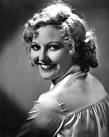
Thelma Todd


A decided departure for April’s Star of the Month but nonetheless a huge talent our feature was an underrated comedic screen pioneer whether she was paired with Zasu Pitts or Patsy Kelly or as a stand alone star when featured in film’s like Horse Feathers in 1932 that starred Titans like The Marx Brothers, Thelma Todd was a stunning blonde that kept her audiences in stitches with her captivating countenance, raw talent and pinpoint comic timing.  Her life cut short however under mysterious circumstances at age 29 remain unsolved to this day. We will explore that conundrum later. 

She was born in Lawrence Massachusetts in 1906 and was a gifted student and that being the case her original intention was to be a teacher but fortunately for the world that didn’t last long.  Thelma found herself working part time as a fashion model, which led her to compete and won her the Title of Miss Massachusetts of 1925. She then competed for Miss America but lost but no matter a Hollywood talent agent discovered her and enrolled her in acting school in New York the following year and she began landing supporting roles in silent films like Fascinating Youth in 1926 and The Noose in 1928. Then Hal Roach recognized the opportunity to create a female version of Laurel and Hardy already in his stable pairing her first with Zasu Pitts (17 films) and then to even greater success with Patsy Kelly (21 films). 

Anxious to be taken as a serious actress Thelma changed her name and worked briefly as Alison Lloyd in a crime thriller under the direction of and later boyfriend with Roland West with the release of Corsair 1931.  Extending her dramatic side she played the lover of Ricardo Cortez assuming the character of Dashiell Hammett’s Sam Spade in the original Maltese Falcon although it paled in comparison to the Humphrey Bogart edition released in 1941. Thelma Todd though was most at home in comedy and the perfect foil for the aforementioned Marx Brothers, Harold Lloyd, Jimmy Durante and Laurel and Hardy. Not to be outdone Thelma starred opposite A list actors Cary Grant in his first role This is the Night in 1932, a drama with John Barrymore Counselor at Law by William Wyler in 1933 and returning to comedy with Bing Crosby and Joan Bennett 1935’s Two for Tonight. 

Thelma made 119 films although most were shorts nearly all of them were hits and her lasting legacy will be a comedic genius whether as a duo or a solo she shined brightest among Hollywood’s finest comedian’s and held her own alongside the drama Kings and Queens of her day. The term screwball comedy probably originated with the likes of Thelma and her partners Pitts and Kelly and there were many more famous names to follow. Thelma Todd laid the groundwork for not only women comedians but for many of her male counterparts to follow as well.  The shorts she made with Patsy Kelly stand the test of time, as even today you’ll find yourself laughing throughout. These can be seen occasionally on TCM. 

Just before Christmas in 1935 Thelma was found outside her restaurant inside her car dead of an apparent accidental carbon monoxide poisoning. It was alleged she was warming up her car as the weather forecast was for a frosty morning that day in Los Angeles.  Conspiracy theories ran rampant soon afterward ranging from depression and suicide to money issues and murder and even extortion. The Grand Jury discovered that Thelma was bloodied about the mouth, which fueled the speculation that she had an altercation with ex-husband Pat DiCicco. They had physical abuse issues in their marriage.  Most disputed any notion that Thelma was depressed as she had just completed filming The Bohemian Girl and her restaurant Thelma Todd’s Sidewalk Café was drawing like gangbusters (no pun intended) and it was rumored the mob wanted in but Thelma and boyfriend Roland West didn’t want any part of them fleecing the Hollywood elite which also led some to believe had a hand in her demise. The underworld wanted Todd to turn her restaurant over to them and make it a gambling establishment. 

The medical examiner also found Thelma had cracked ribs, neck contusions, a broken nose, a chipped front tooth and partially digested food in her stomach. These facts alone would seem to rule out that Thelma was contemplating suicide and point more to her death was indeed a murder. The District Attorney at the time one Buron Fitts was rumored to be both corrupt and inept. If you’re interested in Thelma’s life there’s a few books out their Hot Toddy, which has mixed reviews and a more staid version The Ice Cream Blonde, and Testimony of a Death. 

Thelma Todd is not a name that might roll off your lips but The Ice Cream Blonde as a pioneer in comedy created a foundation that film historians like the late Robert Osborne took notice of and although she never got the recognition she deserved her comedic talents will be preserved forever


Saturday, December 9, 2017

White Christmas Performed by The Kings Academy Players


Although it’s been years since I watched 1954’s Silver Screen version of White Christmas starring Bing Crosby and Danny Kaye when the last musical number concluded and we put our hands together in stunned appreciation for the High School company that just performed it for Debra and I, in my mind it could have rivaled any production stage or screen.  Maybe that’s overstating things a bit after all it was a High School production. But Ladies and Gentlemen what a production!

If these young adults many of them anyway aren’t headed for Julliard then for the Broadway stage knock me down with a feather. When you look at the Broadway like Playbill and then peruse the pictured actors and bios they look like kids. Yet up on the stage they become transformed into 20 something and when they open their mouths they become adult performers and in a flash of lightning you’re whisked away to the Great White Way in the exquisitely designed Page Family Center for Performing Arts. 

The story a simple one Bob Wallace and Phil Davis ex Army vets team up with sister act Betty and Judy Haynes put on a Christmas show in rural Vermont in a failing Country Inn run by their ex General Henry Waverly. With a little romance mixed in, the cast performs music by the legendary Irving Berlin with voices this side of heaven. This troupe featured junior Kyle Martin in Bing Crosby’s role filling the crooner’s delivery with a mellifluous voice that filled every inch of negative space and with his sidekick Graham Popadic a senior with equally rousing melodic chords in the Danny Kaye portrayal as the devil may care playboy suddenly struck by Cupid’s arrow by dancer and singer Gracie O’Connor in the Vera Ellen role. And rounding out the love interest duo is senior Jessica Turley as Betty Haynes who was instantly equally smitten to Kyle Martin. Gracie and Jessica both with earthbound Angelic voices complimented each other like no duo in recent memory.  These Haynes sisters together, apart and as a trio with Kate Higgins also a senior and a quartet with the boys nearly flattened me with each note. A surprising addition was the diminutive sophomore Sara Meldrim playing the General’s granddaughter belting out “Count Your Blessings Instead of Sheep” took the audience by surprise in terms of it’s strength and melodic timbre.  Some of the best and lesser known masterfully crafted Berlin musical compositions are here including “Blue Skies”, “Sisters”, “I’ve Got My Love to Keep Me Warm” and of course “White Christmas”. However what made the whole evening astonishing was how the production blended the music with the pageantry of dance and costume. We will look forward to the King’s Academy’s next production which is slated for late January, Peter and the Star Catcher. 

The choreography alone is worthy of Broadway.  The dancers had our pupils widened with each scene. The tap dance numbers were syncopated with precision and the costuming was visually stunning. And leading this production is a Tony nominated director with the moniker of David Snyder without whom despite these gifted players this spectacular show could not have been elevated to this level of success.

The Kings Academy players are the crème de al crème and with White Christmas not only did they set the mood for the season but these teenagers made us hearken back to a period in this Country to a simpler time and for two hours had us riveted to our seats until it was time for us to bolt from our winged chairs and applaud them for this phantasmagorical Christmas delight. 


Tuesday, December 5, 2017

Frank Sinatra


Our star for this Christmas season is also our Birthday boy Frank Sinatra. Born on December 12, 1915 Ol’ Blue Eyes would’ve been 102 this year. He passed however in 1998 at the age of 82 too soon by most accounts but let’s dig a little deeper into this American icon and see if we can come up with some factoids that you might not be aware of shall we? Although he was widely known for his active support of JFK in his election bid in 1960 it was his ardent support for the state of Israel that had him switch to the Republican Party in the 1970’s.  

His longtime friend Bing Crosby said a voice like Sinatra comes along once in a lifetime but why did it have to come along in mine! Bing Crosby was indeed a humble man and had a tremendous career of his own both on screen and in the recording studio but his story is for another time. Francis Albert Sinatra was born in Hoboken New Jersey to Northern Italian immigrants Natalina Della Garaventa and Saverio Antonio Martino Sinatra a boxer, fireman and bar owner. It was that same friend that spurred Sinatra as a teenager to become a singer watching and listening to Bing Crosby. Sinatra began his career performing in glee clubs and later in local nightclubs. When the radio found his voice as he was later dubbed “The Voice” it was with the bandleader Harry James he made his first recording “All or Nothing at All” in 1940. He later joined the Tommy Dorsey orchestra and after one chart topper after another in 2 years he struck out on his own. Dorsey fought tooth and nail to hold on to his star attraction and it was rumored not until Frank’s mafia ties threatened the bandleader did he allow him out of his contract. 

Oddly enough Frank was turned down for the military because of a ruptured eardrum and it was during these years that the Bobby Soxers would swoon over his baritone voice and brand him with names like “The Voice”, “Ol’ Blue Eyes” and later “Chairman of the Board” He even made his film debut in 1943 with “Reveille With Beverly” and “Higher and Higher”. After the war though musical tastes began to change and it was during this period that Sinatra’s career flagged badly and he lost his recording contract. He even considered suicide and with damaged vocal chords his fate as a singer seemed all but sealed but Providence would intercede. In 1953 with the help of the love of his life (not hers) wife Ava Gardner harangued movie mogul Harry Cohn into giving the part of Maggio to Frank in his epic “From Here to Eternity” and when Cohn relented Frank’s performance won him the Academy Award for best Actor in a Supporting Role. Magically his acting and singing career was revived and to some he would rise to even greater heights. 

He struck a deal with Capitol Records and with his mature sound and jazzier delivery his renaissance was complete. In fact in 1955 another Academy Award Nomination would be his with “The Man With the Golden Arm” about a heroin addicted card dealer and then in 1962 he would achieve critical acclaim with “The Manchurian Candidate.” By the end of the decade and the British Invasion Sinatra had to endure yet another musical drought and as he ended his association with Capitol he bought his own record label Reprise. 

By the mid-60’s though Frank was back on top yet a 3rd time this time he had company and it was a formidable group. And as most of us know it was later to be known as The Rat Pack. At its core were Frank, Dean Martin, Sammy Davis Jr., Peter Lawford, and Joey Bishop. Their success especially in Las Vegas was legendary.  Even Jim Morrison of the Doors was to give Sinatra his due when he said, “No one can touch him.” 
They made some movies together some memorable “Oceans Eleven” and some forgettable like “Four for Texas”.  In 1966 he would have maybe his biggest commercial success with his recording of “Strangers in the Night” winning a Grammy and soon after a duet with daughter Nancy (My Nancy With the Laughing Face) in “Something Stupid” and in 1967 recording Paul Anka’s “My Way”.  

Sinatra’s personal life would take too much space to cover here but suffice it to say Frank married 4 times Nancy Barbato in 1939 who he sired 3 children with, in 1951 to Ava Gardner and in 1966 to Mia Farrow. The latter two were short lived but it was wife number 4, Barbara Marx (Ex-wife of Zeppo Marx) that Frank would have the most enduring marriage of 20 years until his death in 1998.  As a side note 2013 Mia Farrow said that Sinatra was the love of her life in an interview with Vanity Fair and also claim that her only biological son Ronan was Sinatra’s child. 

In 1987 Kitty Kelly published an unauthorized biography of Sinatra while he was still alive. It was mostly negative and highlighted his mob ties and his philandering and his overall despicable character. A hit piece if there ever was one but his career and impact was just too great and it turned out to be merely a flesh wound on a remarkable life and career.   Frank died of a heart attack on May 14, 1998 in Cedars-Sinai in California. At Yankee Stadium after every victory they play his hit “New York, New York”.  


Monday, November 6, 2017

Tyrone Power


Robert Osborne once wrote that two men stood out as if they were born on Mount Olympus the first was MGM’s Robert Taylor and the other is our Star of the Month for December 20th Century’s heartthrob Tyrone Power. In his time he gave mega stars Clark Gable and Errol Flynn a run for their money as Hollywood’s resident sex symbol. 
First though let’s trace his beginnings. Born in May of 1914 born to a family with  a long lineage of stage and screen actors. Tyrone began acting at age 7 and before his father died in 1931 he appeared with him before he was 17 in Chicago on stage in a production of The Merchant of Venice. 
After heading to California his father’s name opened a few doors but yielded not much more than jobs as an extra so it was back to Broadway to sharpen his skills and he landed one as an   understudy  to Burgess Meredith and it was there that  talent scouts from the West Coast brought him back to Hollywood where he signed with 20th Century Fox in 1936. After his first disaster in Sing Baby Sing he was undaunted and with Hollywood angel’s Alice Faye and Hedda Hopper by his side Tyrone continued to find regular work in light comedies like Girls Dormitory and Ladies in Love. With his two influential supporters  and his striking good looks Power would receive his landmark role that same year that minted his stardom in Lloyd’s of London. Within 6 months of that film’s release Power had his hand and footprints in front of Grauman’s Chinese Theater and was #2 Box Office behind Mickey Rooney.   

He was finally off to the races as Power proved a bankable star in two big musicals Thin Ice in 1937 with Sonja Henie and then Alexander’s Ragtime Band in 1938 in which he sang the title track. Tyrone Power singing? He was no Sinatra but his voice was mellifluous enough for studio executives.  Then Tyrone went Western as he began to stretch his acting capabilities first in Jesse James in 1939 and Noir in 1940 with Johnny Apollo. Things then turned to the romantic side for Power as he reeled off The Rains Came, The Mark of Zorro and Blood and Sand the latter two costarring with the strikingly beautiful 17-year-old Linda Darnel and then The Black Swan  with Maureen O’Hara. It was these films and  the double edged sword of success  that rocketed Tyrone to superstardom yet kept him typecast in roles that prevented him reaching his true desire to be taken as a serious actor.

When WWII came Power joined the Marines in 1942 and although he remained stateside until 1945 he finally he became active in the War when he flew cargo and troop missions to Iwo Jima and Okinawa. When he returned home he was a changed man and after an affair with Judy Garland and a terminated pregnancy with her Tyrone was through with musicals and he sought more serious roles the first being Somerset Maugham’s The Razor’s Edge in ’46 and then very dark Nightmare Alley in ’47 the story of a con man’s rise and fall against the backdrop of a carnival. It was this role that proved his mettle way beyond his good looks. Studio bosses kept the film on the down low and after it’s release pushed hard with the release of  The Captain from Castile which was more in keeping with their image of who they thought America wanted to see.  So often when heroic stars take on roles that are so atypical it’s a risk for their career and the studio but Power pulled it off. In 1957 in what most critics agreed was his most acclaimed role opposite Charles Laughton and Marlene Dietrich in Witness for the Prosecution, Power plays a U.S. War Veteran accused of murder. It was a landmark film for its time garnering 6 Academy Award Nominations including Best Picture.    

Tyrone Power was one of the best swordsman in Hollywood and in what was to be his final film Solomon and Sheba in 1958 starring opposite his friend George Sanders while engaged in the film's sword fight Tyrone would exclaim: Must Stop! It was then he would drop to the floor then in seconds he fell supine  and expired  of a heart attack at age 44 a disease similar to his father. Yul Brynner was to take his place and if you look closely you can see Power in the long shots but this role would be just be an unaccredited one. 

Tyrone Power would sire 3 children 2 with second wife  Linda Christian and 1 with his companion of 6 months Deborah Minardos who gave birth to a child 2 months after his death. All 3 have pursued acting albeit to minor success including his namesake Tyrone Power Jr. 
Tyrone Power dead at age 44 November 15th 1958.  


Sunday, September 3, 2017

Shirley Temple


Our Golden Age Star is truly a Golden Star. Shirley rocketed to fame at age 4 and unlike most child stars whose fame had an expiration dates like milk Shirley lives on forever in film and in our hearts. Many factors contribute I suspect to that fact, talent being the number one ingredient and like Gary Cooper once said no one rises to stardom without the help of a person of influence and that man was David O. Selznick who guided her successfully from age 4 until age 21.  Of course Shirley’s ambitious mother Gertrude played a huge role in gaining the exposure Shirley needed to land her the first movie contract but her Mom never impeded Shirley’s success but also kept a watchful eye on her daughter’s global stardom. Her father George as if by serendipity a bank employee became her financial advisor. However what I think was the number one factor the real key to Shirley’s longevity was that everyone that worked with her or knew her loved her. Stars like Gary Cooper, Cary Grant and Bill Robinson (Mr. Bo jangles) were never threatened by her stardom because she was genuinely humble, naturally charming on screen and off and one of the most charitable Hollywood stars of any age. 

Shirley born in Santa Monica California on April 23, 1928 got her start at just 3 years old in movie shorts called “Baby Burlesques” and her Mother Gertrude spotting her natural flair for dancing enrolled her in dance lessons at 3 ½.  These two factors the low budget films and dance classes landed her a contract with Fox Film at age 6.  Her first celluloid was the smash hit Little Miss Marker in 1934 costarring Adolphe Menjou that began her 4 year meteoric reign as the top box office draw for the Studio. Next came maybe one of her most famous musical numbers in Bright Eyes wherein she performed The Good Ship Lollipop. This tune is timeless.   Her parents hoped she would do just 3 films a year but relented to 4 and we are so glad they did because in 1935 The Little Colonel, Our Little Girl, Curly Top and The Littlest Rebel followed wherein we witnessed her spectacular dance number with Bill Robinson. Eye popping for it’s time a little white girl dancing with a black man but audiences embraced it with a fervor that was unparalleled for that time in history.  Her friendship with Bill lasted until his death in 1949. 

One of this writer’s favorite came in 1937 Heidi. Most of you know the story. The grandfather played by Jean Hersholt a curmudgeonly old man hated by the town is transformed by the magic of his granddaughter who is thrust upon him unceremoniously by the wicked Aunt Dete played perfectly by Mady Christians. Ripped apart and happily reunited this film had all the makings of a classic that proved to be the exclamation point on a childhood stardom that will last from here until eternity. 

As her childhood slipped away so did the roles being offered to Shirley however one that still stands out is the 1947 The Bachelor and the Bobby Soxer where she starred with the aforementioned Cary Grant and Myrna Loy. When roles she tried for were being offered to other stars Shirley knew the handwriting was on the wall and she bowed out gracefully.  Her personal life featured two marriages one unsuccessful to John Agar who she starred in one film Fort Apache in 1948 with John Wayne and Henry Fonda. Her second time around found longevity and happiness followed for more than a half-century to Charles Black. Mr. Black recounted had the surf not been flat that day he might not have met Shirley. Instead he went to that cocktail party and that’s when he met Shirley Temple still just 22 he was 31 at the time.   A veteran of WWII living in Honolulu at the time and son of the president of Pacific Gas and Electric he was in the eyes of the World the man who married Shirley Temple.  That mattered little to Charles he had met the love of his life and their offspring Charles Black Jr. said of his parents they never spent more than a couple nights apart from each other in the nearly 55 years they were married until Charles’ death in 2005 to a bone disease. 

Shirley made guest appearances albeit grudgingly from time to time more for her fans than for herself. She had some bouts with cancer and Robert Osborne who met her in the 1990’s was surprised that she still continued to smoke cigarettes. The fact that she smoked at all he felt was incongruous to her pristine life and not to mention deleterious to her health.    

She ran unsuccessfully as a Republican for congress in 1967 and Shirley the diplomat’s career began in 1969 when she represented the U.S. for the General Assembly of the United Nations. Next she was appointed U.S. Ambassador to Ghana from December 1974 until July of 1976, then for Czechoslovakia in 1989-92. Appointed to many Board of Directors concurrently after that but that’s just boring filler Shirley Temple our Star for October was one of a kind and when her light went out on February 10, 2014 at age 85 it was as if Luna Park went dark. 


Sunday, June 25, 2017

The Merry Mailman


There are many people in our lives that we like to call friends. But are they really? Truth is the word friend is a somewhat an ambiguous term. We have Facebook friends for example but are they in reality? Most I would venture to say are not more than Hallmark acquaintances that we rarely or never see. This is a story about someone and I like to think of him as my friend that carries letters and is more significant to me than most of any follower on Instagram or Facebook.  Each day I ride my bike through my neighborhood and invariably if my timing is right I pass the Merry Mailman. With this man I experience someone who retains a demeanor that never wavers. He is cheerful, loquacious, funny and never in a bad mood. And what’s even more unusual he’s not my friend on the aforementioned Facebook, or a follower on Instagram and I don’t have his email. On top of that I don’t even know his name.*But this Merry Mailman typifies something more than just a someone with a sunny disposition he is professional that performs his vocation with a discernment unlike many of his counterparts not only in the postal service but in many other career callings as well. Delivering mail on foot particularly in hot humid South Florida is not exactly and excuse the pun a walk in the neighborhood. He does it with pizzazz and you don’t often see your postal carrier with gesticulating moves like this man. No disrespect but the mail carrier on my route delivers our posts in perfunctory fashion no smile no emotion no vitality and certainly no animation. Not my friend every step is bounding and his energy is reminiscent of a lithium battery. 


With this man I experience someone who retains a demeanor that never wavers. He is cheerful, loquacious, funny and never in a bad mood. And what’s even more unusual he’s not my friend on the aforementioned Facebook, or a follower on Instagram and I don’t have his email. On top of that I don’t even know his name. But this Merry Mailman typifies something more than just a someone with a sunny disposition he is professional that performs his vocation with a discernment unlike many of his counterparts not only in the postal service but in many other vocations as well. Delivering mail on foot especially in hot humid South Florida is not exactly and excuse the pun a walk in the neighborhood. 

The Merry Mailman is an exclamation point on my ride and I look for him each time I clip into my bike and we always have something to say to each other. It’s rarely a matched tete a tete in fact rarely so but it matters not but it’s an exchange that is often invigorating and always spontaneous and extemporaneous. Sometimes I hear him laugh when my words spill out and that makes me smile as words can have a lasting affect bouncing off one to the other.   However his natural charm doesn’t need any assistance and when he drops his letters in each box they have an extra postmark on them “From Your Merry Mailman”.  


*His name is Arnie


Sunday, June 18, 2017

Jimmy Stewart


Robert Osborne started off his tribute to Jimmy Stewart by telling us roles he didn’t portray. He donned full makeup for the part of an Asian in The Good Earth when he was but 27 but thankfully as he points out that role went to a much shorter Keye Luke who actually was Chinese. Then there was over a 100 others including North By Northwest that actually Alfred Hitchcock had him in mind for but, as fate would have it Cary Grant landed that iconic role instead. But let’s turn to this actor’s fabled career as we leave behind movies he didn’t star in shall we?  

Alfred Hitchcock and he would team up for four films Rope, The Man Who Knew Too Much (which was a remake of one of Hitch’s earlier films) Vertigo and probably his most famous of all Rear Window where he costarred with Grace Kelly before she would become Princess Grace of Monaco. The latter film remains in the top 10 films of all time no small feat in view of all the magic of CGI of late mainly because the story is singular in nature and it’s premise of Stewart being held hostage with a broken leg (they had plaster casts back then) inside his hot apartment overlooking the courtyard of his residential complex and everyone’s rear window had never been done. 

James Maitland Stewart born May 20, 1908 in Indiana, Pennsylvania to English-Scottish parents who owned a hardware store. Jim was educated at a prep school and excelled in football and track he also sang played the accordion and acted on occasion. At Princeton where he studied architecture Jim got more exposure to acting with the University Players, which took him around the country and a small stint on Broadway. Here he would meet his lifelong friend Henry Fonda. 

In 1934 his first screen appearance in a short titled Art Trouble actually starred Shemp Howard of Three Stooges fame but it was his collaborations with the legendary Frank Capra in roles like You Can’t Take It With You costarring Jean Arthur in 1938, Mr. Smith Goes to Washington in 1939 and after WWII in the holiday classic It’s A Wonderful Life that launched Stewart into superstardom and his iconic “everyman” persona with that Pennsylvania “aw shucks” demeanor so many Americans loved him for.  It was George Cukor however that directed him in his only competitive Oscar win in 1940 The Philadelphia Story opposite the luminaries Katherine Hepburn and Cary Grant.  After that film Uncle Sam played a hand.  

 Jimmy Stewart drafted into the Army in 1940 would begin another starring role this time for his Country. He began army life as a private but during the course of the war rose to the rank of colonel and he because he had learned to fly in 1935; he flew combat missions in Europe. Jim remained in the U.S. Air Force Reserve until 1959 where he rose to the rank of brigadier general. And as one of my favorite database notes it was after the war that his career really took off.  

The lighter fare continued in 1950 in one of his favorite roles Harvey where his companion is an imaginary rabbit that has his relatives and friends completely bollixed with except of course Jim. But Stewart wanted grittier roles and they started to follow. Winchester ’73 and Broken Arrow both in 1950 then as we alluded to earlier Alfred Hitchcock came calling with his 4 productions. Otto Preminger’s Anatomy of a Murder in 1958 also found rave reviews for Jimmy’s resume. 

Stewart in the ‘70s tried his hand at television The Jimmy Stewart Show a sitcom which had a short run a drama called Hawkins and then opposite Lauren Bacall and John Wayne The Shootist in 1976. Jimmy Stewart married to his wife Gloria since 1949 had largely disappeared from the public eye showing up for various awards and with the loss of his wife in 1994 he was deeply affected. They had twin daughters and he had become father to her two sons by her previous marriage. Jimmy Stewart left this earth at age 89 and he was as most will recall a good man.