Jack Briant Reporter

Thursday, June 6, 2019

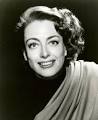
Joan Crawford


Our star for July had a career that spanned for more than 45 years and a filmography of 80 films. Lucille Fay LeSueur born March 23, 1905 as stated on imdb.com still her actual birthday remains somewhat a mystery to this day. Lucille said she was born in 1908, which would have made her just 16 when she contracted at MGM.   Robert Osborne recalled their first meeting back in 1959 on the set of The Best of Everything. The introduction came via Diane Baker who had a starring role in the film. What surprised Robert was her stature a mere 5’3”, her red hair (he had only seen her in black and white films) and her hand shake grip. It was more reminiscent of John Wayne or Charles Bronson. He also said for a stranger she wasn’t dismissive with him, as she looked Robert straight in the eye when they spoke.  And there was something else he said, she was extremely charming. When writing about her in his monthly column Osborne said he could still recall the strength of that handshake. 

Born in San Antonio, Texas her father abandoned the family around the time of her birth and her mother made ends meet taking in laundry. She had a short-term stepfather (rumored to have slept with) and briefly changed her name to Billie Cassin. Billie learned the Charleston and began to win contests and left for Chicago and thence to New York and it was there she got her first break from producer Harry Rapf when he spotted her onstage in 1924, and from there her portrayal three years later in what would be her 21st film, Our Dancing Daughters that would make her a star. This film has her portraying a flapper although you mightn’t think of Joan Crawford as a hoofer but her Charleston winning contests aided her here.  Her story was one of grit and determination as Joan had many setbacks some of her own making and some truth be told as Hollywood at the time didn’t have roles for actors especially women as they entered their 40’s.  And most people today unfortunately think of her personified by Faye Dunaway’s 1981 portrayal of Joan in Mommie Dearest as a demonic parent stewarding and abusing her two adopted children (especially her daughter Christina) and the famous “wire hangers” scene. In her defense Joan was so poor that those “hangers” most likely reminded her of her life nearly destitute growing up. Her ‘psychic wound’ a therapist might speculate.  Joan’s demands on the set made her difficult to work with and her ceremony about her star status made her persona non grata with some of her costars. See the mini series on Prime called Feud from 2017 starring Jessica Lange as Joan Crawford and Susan Sarandon as Bette Davis and you will get a real flavor of the two huge celebrities.  

There were many stars that were luminaries in the silent era only to be forgotten once talkies became the rage. Crawford was one of those survivors. Joan also had a distinctive countenance that set her apart; sculptured cheekbones and full lips and broad shoulders that one director made a huge mistake about. Michael Curtiz with a long list of box office hits was also a tyrant. One day he became unhinged on the set of Mildred Pierce as he was convinced Joan was wearing shoulder pads. He ripped her dress off at the neckline only to discover she wasn’t. There was some amelioration though Joan won the Oscar that year for best actress.  

Louie B. Mayer didn’t like the name Lucille or Billie and so he decided to have a name change contest in which he offered a prize of $1,000.00 Joan didn’t like it in fact she thought it sounded like “crawfish” and a costar Bill Haines nicknamed her Crawford Cranberry. Married 4 times her sexcapades were legendary. It was said that Bette Davis remarked that Joan slept with every male star except Lassie. Rumored to invite men places and show up naked it was also reported that Joan bedded her director Robert Aldrich, head of Warner Brothers, Jack. Married at 21 first to Douglas Fairbanks Jr. 19 in 1929 they divorced in 1934. Sprinkled in was her on again off again affair with Clark Gable. Being that they starred in 8 films together their romance seemed to heat up whenever they were paired. Then there was the story that had Bette purportedly attracted to Franchot Tone. Hearing that Joan invited the star over she answered the door naked. They married but it lasted just 3 ½ years.  Then there was Spencer Tracy, Jackie Cooper who was just 17 when she was 34 that sparked a huge controversy. That dalliance lasted 6 months. There were others of course but her last spouse Alfred Steele of four years had her sit on the board of Pepsi Cola after his death. It enabled her to pay off some of the debts he had saddled her with. Joan used sex as a weapon and based on the time in history it wielded a great power over men. Today of course it would be considered abuse but to Joan she didn’t see it that way it was all about control of her career and over men and the parts she would play. 

After her stint at MGM Joan’s star took a higher trajectory when she signed with Warner Brothers. It was in this studio film audiences discovered Crawford’s wide range between intelligence, ruthlessness, vulnerability, codependence and pure power. Joan adroitly starred in the Film Noir genre 9 times. Memorable roles began in 1945’s Mildred Pierce (Oscar) Humoresque in 1946 and Possessed in 1947. Joan sensing that as age being a factor at the time moved from Warner and began to freelance and her work at RKO in 1952 had her back on top again with her 3rd Oscar nomination for her role in Sudden Fear and then of all things a western directed by the enigmatic Nicholas Ray in Johnny Guitar 1954 wherein she plays a incendiary saloon owner wrongly accused of murder. Joan’s career reached its final crest in 1962 in the famous pairing with archrival Bette Davis in Whatever Happened to Baby Jane. After that film Joan was relegated to second-rate horror films but Joan was the consummate professional loyal to her fans and gave every role no matter the budget her level best. 

Joan died of a heart attack at just 72 possibly fueled by heavy drinking. She disinherited both her adopted children Christina and son Christopher. One final note on Bette Davis, Joan said, “I don’t hate her, and I resent her. I don’t see how she built a career out of a set of mannerisms instead of real acting ability. Take away the pop eyes, the cigarette, and those funny clipped words, and what have you got? She’s phony, but I guess the public likes that”. Joan Crawford definitely an icon of the Silver Screen. 

P.S.
In the MGM film Grand Hotel in 1932 starring Greta Garbo, John and Lionel Barrymore and a young Joan Crawford jousting formidably with Wallace Beery steals the movie. Catch it on TCM if you get a chance.  


Monday, May 6, 2019

Joseph Cotten


Joseph Cheshire Cotten born May 15, 1905 in Virginia would prove to be a loyal spouse to both of his wives first to Lenore Kipp who he wed in 1931 until her death in 1960 and then later that year to Patricia Medina a star in her own right until his death at age 88 in 1994. But let’s take our deep dive into our June star shall we?

Joseph Cotten’s movie career was hardly what one might call a yeoman effort as his first film was as some consider maybe the best movie every made: The Orson Welles epic Citizen Kane. And unlike most stars in the making Cotten wasn’t relegated to some bit part he landed a pivotal role-playing both best friend and toughest critic to Welles’s title character. 

But let’s back up a bit. The part came most likely via Broadway starring opposite Katharine Hepburn in The Philadelphia Story. As most of you know that play moved to the big screen and Cotten’s part went to Cary Grant the bankable star, as Joe Cotten was a virtual unknown as yet. Bolstering his chances for Citizen Kane most likely came from his work with Orson and his Mercury Theater group on the radio and with Cotten’s velvety voice he was a natural for the medium. As an aside it was this Mercury group that pulled off one of the biggest hoaxes of all time when it staged the War of the Worlds in 1938 a supposed invasion by Martians. We might touch on that if we feature Orson Welles later this year.  

After Citizen Kane Cotten’s follow up film The Magnificent Ambersons in 1942 which carries a 93 metascore at imdb.com (with several critics giving it a 100) has a story revolving around a Midwestern family facing decay in the latter part of the 19th Century In his first two films Cotton began to underscore his box office bank ability the Hollywood moguls.  The Amberson film directed by Welles and two others was not exactly as Orson had planned it nonetheless has Cotton’s star was shining bright right quick.  1943 saw Joe being loaned out for the Hitchcock film Shadow of a Doubt wherein he stars as the menacing ‘Merry Widow’ killer opposite Teresa Wright.  In Shadow of Doubt Joseph Cotton extends his acting ability   from heartthrob to now deadly menace topped off with suaveness and charm. 


Beside his voice age was on Joe’s side as well. Being in his late 30’s much of the heavyweight talent in Hollywood was had headed off to WWII leaving a dearth of leading men and therefore a wide open field for the handsome 6’2” Cotten and armed with a classy persona the stars were aligned for him to costar with the likes of Deana Durbin, Ginger Rogers, Claudette Colbert, Ingrid Bergman and the stunning Jennifer Jones who he starred with 4 times including my favorite in 1948’s Portrait of Jennie. It was in 1943’s Hers to Hold with Deanna Durbin that shot him to the front of the ranks as next up was 1944’s Gaslight opposite Ingrid Bergman in which his role had him comforting her after her maniacal husband played by Charles Boyer who was trying to drive her insane. Next up in gallant white uniform he took the place of Claudette Colbert’s deceased husband at the front in 1944’s Since You Went Away.  

With a stellar resume in hand Joe Cotten lost no ground when the Hollywood veterans came home as Joe continued with the string of leading ladies: Loretta Young twice, Bette Davis also twice, Olivia de Havilland three times, thence Joan Fontaine, Barbara Stanwyck and newcomer Marilyn Monroe. 

Joseph Cotten once said: “It was easy- I was tall and I could talk.” It of course wasn’t just those two attributes but his friendship with Orson Welles didn’t hurt things either. In fact following up their pairing in Citizen Kane in 1941 they would later costar in the 1949 zither dominated sound track epic The Third Man focusing on post-war Vienna. Some claim that it is a Noir classic. There is no doubt the novel by Graham Greene and director Carol Reed remains on of Hollywood’s masterpieces. 

Joseph Cotten and Jennifer Jones a 5 time Oscar nominee and winner for Song of Bernadette costarred 4 times. She once said in a line from one of their films: “I think we were made for each other.” And if you watch Since You Went Away 1944, Love Letters 1945, Duel in the Sun 1946 and Portrait of Jennie in 1948 you might agree these two carried an onscreen magnetism that leapt off the screen. And their last collaboration in a fantasy entitled Portrait of Jennie an emotional grabber that holds my attention similarly to Random Harvest starring Ronald Coleman and Greer Garson if your lachrymal glands don’t start watering then you might have a heart of stone.  It plays every so often on TCM I recommend it highly.  

As it turned out by 1949 Cotten and his Selznick contract was over and his career began to sag a bit as he starred in several forgettable films.  And after a dismal reunion with Hitchcock in Under Capricorn he met newcomer Marilyn Monroe in 1953’s Niagara playing the honeymooner she wants to rid herself of as she tries to persuade her lover to push him over the Falls. That same decade Joe returned to Broadway and met and married the aforementioned Patricia Medina where he found great happiness until his death. In 1964 as a scheming doctor he reunited with Bette Davis and Olivia de Havilland where he made his last hurrah in the 7 time Oscar nominated film Hush Hush Sweet Charlotte directed by Robert Aldrich. 

Joseph Cotten took talent, timing, looks, voice and opportunity and made his star on the Walk of Fame a brilliant body of work.  


Monday, April 15, 2019

Marilyn Monroe


Norma Jean Mortenson or her more famous moniker, Marilyn Monroe is the subject of our May Golden Age star.  She married for the first time when just a teenager to a merchant seaman named Jim Dougherty. He a former football captain and later merchant seaman during WWII Norma Jean and Jimmy then 20 began dating when she was just 15. They married a year later on her 16th birthday, which prevented her from going back to a foster home. Norma Jean for the record had to make the choice of marriage or the foster home she chose marriage. At first the couple were very much in love but Jim at sea most of the time left his wife alone back home where she worked packing and inspecting parachutes for Radioplane in Van Nuys California. Soon Mrs. Dougherty became sought after as a model and when Dougherty intimated that he wanted to start a family that was all Marilyn needed to hear as she went and received a quickie divorce in September of 1946 four years into their marriage while Dougherty was on the Yangtze River where he received his divorce papers. Interviewed after her death he said it was like  “someone had kicked me in the stomach” Much later he revealed that he had destroyed hundreds of letters penned by his former wife a fortune lost as he later lamented.   

Her films grossed over 200 million and when she died of the overdose on August 5, 1962, she was only 36 years old. Born June 1, 1926 in Los Angeles Norma Jean had a difficult childhood. With an iconic breathy voice, she enchanted movie audiences in comedic as well as dramas. Billy Wilder who directed her in Some Like it Hot in 1959 had much to say about the iconoclastic star and in a left-handed compliment he said: “She would be the greatest if she ran like a watch” most likely referring to her incessantly being late on the set and not showing up for shooting. Her erratic behavior caused her to be signed and then released from several contracts in her career.

After her divorce and successful modeling stint included in her resume she headed for Las Vegas where met Bill Pursel and as their friendship grew he noticed her growing popularity. Marilyn began to appear on magazine covers and because of that was invited to Hollywood for a screen test. She changed her name didn’t know how to spell Marilyn and bleached her hair blonde. However at first that was no panacea as the cutting room floor was where she first ended up until she met a more powerful agent by the name of Johnny Hyde who edged her in a small but important part in 1950’s The Asphalt Jungle starring Sterling Hayden. That same year she slipped into the Bette Davis iconic role All About Eve in the character of Claudia Caswell.  Her new agent Johnny Hyde was more than 30 years Marilyn’s senior they became lovers but she spurned his numerous marriage proposals and after his death in 1950 Monroe focused strictly on her career and with roles in Love Nest, They Clash By Night and Don’t Bother to Knock her stardom began toward the heavens. 

A threat however loomed as rumors surfaced that she had posed nude earlier in her life and her mother who she had declared dead in public was actually alive in an institution. Rather than hide from the truth Marilyn confessed that she had posed naked because she needed the money and had kept her mother’s whereabouts secret in order to protect her. The public loved the honesty and her photos and her career continued it’s meteoric rise.  

Along came 1952 wherein she meets the famous baseball icon Joe DiMaggio who had retired from the Yankees the year before.  Higher profile movies ensued Niagara and Gentlemen Prefer Blondes in 1953 but unhappy about the roles she was being offered when ordered to report for her next role she fled to San Francisco to marry Joe and was suspended only to have it lifted as her commodity was just too hot and she reeled off There’s No Business Like Show Business and The Seven Year Itch in 1954. The latter ended her marriage with DiMaggio as when filming a promo for the film over a subway grating in New York City Marilyn’s skirt was lifted over her head by an underneath fan and the widely circulated images left little to the imagination that she was not a true blonde. Enraged back at the hotel alleged violence between the two had Marilyn filing for divorce within days of that argument.  

1955 was a year was a turning point for Marilyn as she began a more introspective period. She moved to New York, set up her own production company, took up acting lessons and even began seeing a psychiatrist. She consulted actors on the Broadway stage and began dating playwright Arthur Miller. They married in 1956. If she had only stayed this course her life might have been a different one. 

When the Egghead and the Hourglass as the media had dubbed them arrived in London to film The Prince and the Showgirl with Laurence Olivier the shine came off the apple as Marilyn discovered in Miller’s notebook that he was unhappy with his new wife. Back in New York and several miscarriages later the spiral down began. The first in 1957 and then the second during the ultra successful Some Like it Hot in 1959 with former lover from 10 years prior Tony Curtis. In 1960 Miller had penned her part in the Misfits opposite Clark Gable. It seemed too raw and too personal and by the time of its release she was finished with her third marriage. To add more pain Gable’s wife who had died within days of the movies release blamed Monroe for her husbands Clark Gable’s death.  

Depressed Marilyn checked in to a hospital for a “rest” only to discover that it was a mental hospital for extremely disturbed patients. The man that still loved her Joe DiMaggio came to her rescue as no one else did. Joe had a short fuse and threatened to take Payne Whitney Psychiatric Clinic down brick by brick if she wasn’t released into his care and due to his stardom and his anger the institution relented. Back together and the relationship somewhat rekindled in Florida they attended baseball games where Joe was batting coach for the Yankees. Joe wanted to marry her again but that was not to be.  DiMaggio indeed had come to her emotional rescue but Marilyn was hell bent on self-destruction as she began to hang out with a crowd Joe deemed unsuitable. When Marilyn died Joe D took charge claimed her body and arranged her funeral barring the Hollywood elite. DiMaggio after her death arranged a 20-year order placing half dozen roses on her grave three times a week.

The headlines in the now defunct New York Mirror on August 6, 1962 read: Marilyn Monroe Kills Self then in a smaller font: Found Nude in bed…Hand On Phone…Took 40 Pills. In addition to the toxicology report many people then and to this day believe she was murdered. Some speculate the Kennedy’s had her killed as her affair with both John and Bobby Kennedy was known in close circles and if it became widely known might have destroyed JFK’s reelection chances. After her breathy Happy Birthday Mr. President spectacle to JFK on May 19th months before her death conspiracy theorists speculate may have been the deciding factor for the Kennedy’s to act.

Marilyn may have been one of the most underrated actresses Hollywood has ever produced but her mental state, lack of confidence, pre performance anxiety and lack of guile (some say) left her ill equipped to handle her stardom. It was no secret she lacked the tenacity and strength of will the likes of Bette Davis and Katharine Hepburn possessed to succeed as those women did. Although fans did not adore those women as Marilyn was adored and were not sex symbols. The men in her life proved weak and lily livered as well and aside from DiMaggio who had no Hollywood clout there were no guiding hands here either. Chauvinism aside Marilyn Monroe needed in her case a strong man especially during the 50’s and early 60’s as women’s liberation had not emerged as yet.  

An interesting bit of folklore that Marilyn lent some credence to was that Clark Gable was her father but no proof could be made that Gable had ever even met her mother Gladys who would as mentioned earlier was mentally hospitalized. The young Norma Jean had early recollections of being smothered by a pillow by her mother in her crib. Monroe also had a half-sister, which she met several times.  Adopted and then sent back to a foster home she was raped at 11 and it was no wonder she opted for marriage as mentioned earlier to Jim Dougherty.  When Marilyn dreamed of being a star her idols were the first bombshell Jean Harlow and Lana Turner. 

Buried in her favorite dress designed by Emilio Pucci her casket was the most expensive of its kind lined with champagne colored silk and heavy gauge bronze. Lee Stasberg famed acting coach gave her eulogy and only close friends attended the funeral. Interviewers asked her what perfume she wore to bed?  She answered Chanel No. 5. Some of her famous liaisons included Frank Sinatra, Elia Kazan, Yves Montand and Marlon Brando. A famous quote had her saying when she thought of Hollywood. “If I close my eyes and think of Hollywood, all I see is one big varicose vein”. Another factoid of note was that Joe DiMaggio’s son claimed that his father when he spoke to her the night of her death said that she was in good spirits. That piece of information doesn’t necessarily confirm Marilyn was murdered because some people that do decide to commit suicide are actually in a better state of mind and can be relaxed, upbeat and normal. Norma Jean will forever be immortalized and continue to be misunderstood more than a half-century after her passing. Perhaps we will never know what happened that fateful night of August 5, 1962. 


Tuesday, February 5, 2019

Tony Curtis


Bernard Schwartz was born in the Bronx on June 3, 1925 to Hungarian Jewish immigrants Helen and Emanuel. His father owned a tailor shop and he shared a room with his two brothers Julius and Robert. His mother suffered from schizophrenia and she often beat her sons. As the depression worsened the boys found themselves in a state institution and were the targets of anti-Semitic boys who threw stones and in 1938 Julius was struck and killed by a truck at just 12 years old. 
So, disturbed by the loss of his brother Bernard was determined to make a better life and he attended Seward Park H.S. on Manhattan's lower East Side. After graduation he enlisted in the U.S. Navy served in WWII aboard the U.S.S. Proteus and received an honorable discharge. After the military he enrolled in the New School for Social Research for acting lessons where he met fellow classmate Walter Matthau. 

Trained in horseback riding and fencing he debuted in what was called a blink-and-miss role as a rumba dancer  in a '49 movie Criss Cross starring Burt Lancaster who he would later star with in The Sweet Smell of Success some 8 years later. He changed his name and for a time was known as Anthony Curtis. His first big role came  In 1958 starring with Sidney Poitier who Curtis insisted he be billed below in the credits had  two escaped convicts chained together  who detested each other but found themselves forced to collaborate  to stay alive. Their former animosity turns into one of respect and friendship and was a groundbreaking film for its time.  

The very next year in a Billy Wilder film built on a story that only lasted 20 minutes the famed director and writer  stretched it out into  just over 2 hours. The plot  which had two men in drag for most of the film remains in the top comedies of all time. In  Some Like it Hot, Curtis and Jack Lemon starred opposite the enigmatic and often troublesome Marilyn Monroe the unlikely threesome pulled off a movie for the ages aided by fading  stars George Raft, Pat O'Brien and Joe E. Brown. It was in this film that Curtis in the beach scene with Monroe that he played homage to his hero Cary Grant imitating his voice and inflection as the millionaire. It had been Curtis's dream to star with Grant  because he joined the Navy at 16  and  served as a tender on a submarine in WWII because he saw Cary staring into a periscope in Destination Tokyo from 1943. After he was on top of the world having filmed The Defiant Ones and Some Like it Hot Hollywood producers asked him what did he want to do next? He said that he wanted to star in a service comedy  with Cary Grant. That dream became reality when he filmed   Operation Petticoat  also in 1959 a story about a pink sub used to evacuate WAC’s during the war. When Grant told him once that acting was so artful it’s artless it struck a chord with him and remained with him the rest of his life.    Curtis a few years before his death paid tribute to Cary Grant on TCM where he talked about the actor’s influence and friendship throughout his career.  
When Tony spoke of  Marilyn he said that early  in their career they were lovers in the years 1949-51 and remarked she wasn’t the brightest but her vulnerability and power made her a force and he thought when the director could get her to perform she was a great actress.  Billy Wilder while filming her had to put up with a lot and  said once of her: She’s a mean 7 year old girl. 

His Hollywood star building in 1960, he starred alongside now centenarian Kirk Douglas in the epic Spartacus then  followed with The Great Impostor and then gave  an acclaimed performance in 1961’s The Outsider even though it was box office poison. Focusing on comedy for the next few years in comedies like 40 Pounds of Trouble, The Great Race and Sex and the Single Girl his box office appeal started to wane. Revival albeit short lived had  Curtis going  against type giving him  critical success once again in 1968’s The Boston Strangler. Tony gained 15 pounds and donned a fake nose for the role and some thought he was Oscar bound only to be disappointed when the announcements were made.  Back to comedy once again but he was not able to recapture the magic of the past and he announced his retirement from films. He was a regular on the hit series Vega$  in the late 70’s and although he continued to work there was nothing of major distinction.  

Tony Curtis a hopeless philanderer during his halcyon days in Hollywood had a famous actor wife Janet Leigh. They made several movies together including Houdini and The Vikings.  He sired a famous daughter with Janet, Jamie Lee Curtis who had a modicum of success from the late 70’s to the present day in films like Halloween, Trading Places and True Lies. Tony married 6 times and had 6 children. His last wife Jill Vandenburg was more than 45 years his junior and was with him until his death in 2010. Interestingly enough when Jamie Lee met his last wife she urged her father to marry her becaause Jill was all about family and helped bring all of Tony’s children together up until his death.  


Sunday, November 18, 2018

Yul Brynner


Kicking off the New Year our Star of the Month for January is very versatile actor Yul Brynner.  Born July 11, 1920 in Vladivostok Russia to a Swiss-Mongolian engineer (later refuted by his son) Boris Brynner and mother Marousia. His father abandoned the family and his mother took he and his sister to China and thence to Paris where he became a musician learning the guitar and began singing gypsy songs in Parisian nightclubs. Whilst in Paris he befriended a man named Jean Cocteau sparking rumors of his bisexuality he joined a repertory company.  Little known thereafter he became a trapeze artist but by age 21 he moved to the States joined a theater company and supplemented his income as a nude model and his acting career began when he enrolled with Russian teacher Michael Chekhov. He hit the Broadway stage in 1946 as a Chinese student named Tsai-Yong in a play called Lute Sang. 
The first film followed in 1949 Port of New York where he co-starred with Richard Rober and Scott Brady. Brynner plays a vicious but debonair drug dealer who will murder anyone who stands in his way. Next came what would be his most famous role in Oscar and Hammerstein’s The King and I in 1951 starring opposite Gertrude Lawrence. By the way Mary Martin as some may know was Larry Hagman’s mother of, I Dream of Jeannie and Dallas fame recommended Brynner for the role. Rex Harrison was first considered but he was unavailable but in hindsight the right actor got the role. Yul received wide acclaim both critical and commercial for his performance in this most remembered musical that is often covered again and again. 
The play ran for more than 3 years an unprecedented number of 1,246 performances for the time and it followed suit that he would reprise the role in film in 1956 and win the Oscar for best actor. It was Deborah Kerr who played the role of Anna. Kerr a huge star on her own did need dubbing of her singing however sang adroitly by Marni Nixon. The film won 5 Oscars and Kerr was also nominated for Best Actress. The role of the Siamese Monarch was his signature role but Brynner would leave his mark in many roles, as we will see. 
Brynner helped create the mystery about his persona by exaggeration and claiming that he was born on the Island of Sakhalin Island in Russia claimed his name was Taidje Khan his father a Mongol and his mother a gypsy and even fellow Hollywood actors were confused as to his true ethnicity, which helped foster the romanticizing   of him throughout his career especially among his women devotees.  
Yul and Hollywood took advantage of his all world look every chance he could. He starred in The Ten Commandments in 1956 as an Egyptian Pharaoh, a Russian general in Anastasia then a of all things a mercenary cowboy in The Magnificent Seven alongside Steve McQueen in 1960.  
In addition to his acting prowess Brynner was a noted photographer, wrote several books including a cookbook. Even after his death from lung cancer he appeared posthumously in a public service announcement wherein he linked his fatal lung cancer to cigarette smoking.  
Yul Brynner sired 5 children including 4 daughters and 1 son was married 4 times and had two significant others of notoriety in Claire Bloom and Marlene Dietrich.  Was one of the very few actors to garner both a Tony and Oscar for the same role. 
Yul Brynner was an arrogant SOB said some of those behind and in front of him in fact when confronted about all his conflicted biographical information he’d given he retorted: “Ordinary mortals need but one birthday” Later in life Frank Langella a costar stated Brynner was never far from a full length mirror. On the set of the Magnificent Seven he would feud openly and behind the scenes with the equally arrogant Steve McQueen as each looked to one up the other during the filming. Brynner did everything he could to avoid adoring fans every chance he could get. Yul worked assiduously at engraving his legend. Whether he was adorned in pleated skirts as pharoh or black denim as an outlaw he wore both costumes well especially with a clean-shaven head, arched eyebrows and penetrating stare. 
By the 70’s the gritty character he often portrayed with brooding expressions was becoming passé and last hurrah came in 1973’s West World wherein he played a murderous robot that malfunctioned. Now considered a cult classic. In the last decade of his life Yul spent much of his time reprising Mongkut in endless tours of The King and I and maximizing his merchandising including ones for his cookbook. He married for the 4th time at age 62 to a young ingénue of 24 a Malaysian ballerina but in that same year he found a lump in his vocal cords his throat was fine but he has inoperable lung cancer even though he has quit smoking a decade before. As mentioned before his posthumous ad said quote: Now that I’m gone, I tell you don’t smoke. Whatever you do, just don’t smoke. He died October 10, 1985. Yul Brynner loaded with egocentricities but nonetheless an icon.  


Thursday, October 18, 2018

Natalie Wood


There are not many stars on the Hollywood Walk of Fame that can lay claim to the icon of child star to teen starlet to adult movie star. Robert Osborne put her alongside legends Lauren Bacall, John Wayne, Lana Turner, Greta Garbo and Bette Davis. Anyone in the public might have turned away from Natalie in her 40-year career, but the fascination never faded and, in her death, and the ensuing mystery her legend continues to this day.

Born Natalia Nikolaevna Zakharenko in San Francisco on July 20, 1938 to Russian emigres who barely spoke English changed the family name to Gurdin when they became U.S. citizens. Her mother Maria was determined to make a star of her daughter and enrolled her at age 4 in ballet school and by age 5 this domineering parent had secured her young daughter a movie role an albeit small one of just 15 seconds in a movie called Happy Land in ’43. It was apparently enough to grab the attention of director Irving Pichel and he cast her opposite Orson Welles and Claudette Colbert playing a WWII orphan in Tomorrow is Forever just 2 years later. Welles was later to comment that Natalie was so good she was “terrifying”. Her next film made her a star and is today still a Christmas classic in the enduring Miracle on 34th Street starring opposite Maureen O’Hara. So popular was the film that Macy’s invited her to their annual Thanksgiving Day Parade. 

California law at the time dictated that child actors had to spend at least 3 hours in the classroom and Natalie was a straight A student excelling in mathematics and Joseph L. Mankiewicz who directed her in the 1947 hit The Ghost and Mrs. Muir starring Gene Tierney and Rex Harrison said he never encountered a “smarter moppet”. Natalie was so conscientious though she felt that all the actors were waiting for her on the set to finish her schooling and would run like the dickens get back to filming because she felt so guilty. It might have been here that Natalie’s mental disturbances began coupled with her mother’s imperious persona driving her for perfection. 

Her next splash would come opposite the iconic James Dean in Nicholas Ray’s Rebel Without a Cause in 1955. Here as the love interest for Dean she was nominated for the first of her 3 Academy Award’s this one in a supporting role. Natalie followed with her least favorite film in which she had little screen time with John Wayne in what might be called the best Western of all time The Searchers in 1956. She felt she was miscast as a white woman abducted by Indians.

A number of minor roles followed until ’61 where she starred opposite on and off-screen lover Warren Beatty as a troubled young girl driven to near madness in Splendor in the Grass. That role earned her the second nomination this time for actor in a leading role. That year was only eclipsed though in her role as Maria in the 10-time Oscar Winning movie West Side Story. Natalie danced all her scenes, but her singing was dubbed by Marni Nixon. West Side Story a modern-day adaptation of Shakespeare’s Romeo and Juliet remains in the annals of landmark films. Only Ben Hur, Titanic and The Lord of the Rings have won more awards at 11.

Mirroring her own life, she took on Gypsy in 1962 based on the true story of stripper Gypsy Rose Lee who was aggressively managed by her stage mother Mama Rose played by Rosalind Russell. The film a success garnered 3 nominations. The following year partnered with upcoming megastar Steve McQueen Natalie garnered her 3rd nomination and plays an innocent Catholic girl discovering she’s pregnant during a one-night stand with McQueen playing a musician. The Catholic censors had a field day with this one as the Hays Code was just losing its grip.

A couple of nonsensical roles followed in Sex and the Single Girl in ’64 and The Great Race in ’65 and then Inside Daisy Clover opposite Robert Redford, which took a serious look at Hollywood’s treatment of stars as a commodity, but script and disjointed scenes kept the movie dark as it was from being a true hit. Natalie followed with Robert Redford with a much-improved script in This Property is Condemned set during the Great Depression.  It was in Daisy Clover that Redford discovered Wood’s extreme fear of the water when fooling around he picked up Natalie in his arms and jumped in the pool while on set with her. When he found out how petrified she was of the water he was crestfallen.

In 1969 Wood teaming with Robert Culp, Elliot Gould and Dyan Cannon in the Avant Garde classic and here the film explored the subject of group sex. Nominated for 4 Oscars it delved into a taboo for the first time that would catapult Hollywood into sex openly for the next decade and beyond. Tame by today’s standards but after that movie cinema was never the same. 

Natalie married actor Robert Wagner twice and she would appear in two of her husband’s TV shows Switch and Hart to Hart. Her last film before her death she costarred with Christopher Walken who some speculated she had an affair with in Brainstorm in ’81. This movie explored the world of artificial intelligence and was quite thought provoking for the time.

Natalie’s death is one that continues to remain open and suspicious in the minds of fans and authorities as some still suspect that her twice married husband Robert Wagner was somehow involved in bringing about her death. The idea that Natalie would end up drowning is so incongruous as stated earlier she was deathly afraid of the water. Natalie died November 29, 1981 at age 43.   

I've avoided many rumors about Natalie's drinking problems, suicide attempts and alleged affairs even two with Frank Sinatra 38 while she was 15 and with Nicholas Ray while filming Rebel Without a Cause. All these tales were laid at the doorstep of her Mother in her quest to make her a star. Natalie was indeed troubled and how many of these stories are true I will leave you to speculate about.  


Monday, October 1, 2018

Danny Kaye


Our November star Danny Kaye was an “acquired taste” so said Robert Osborne. David Daniel Kaminsky born January 18, 1911 in the Brownsville section of Brooklyn New York first listed his birth year as 1913 later corrected by his daughter Dena Kaye in an interview with Ben Mankewicz Osborne’s successor. 

A third son of an Ukrainian immigrant tailor Danny dropped out of High School at age 13 and ran away to Florida where he began singing in the streets as a “busker” and earned enough money to travel to the Catskills and the Borscht Belt performing comedy working for a radio station for camps and hotels. 

 Dena Kaye in describing her father said try to imagine Tommy Tune, Robin Williams and Tony Bennett on stage all at the same time and you might get an idea of the embodiment of the talent of her Dad Danny Kaye. She said her father could do anything dance, sing in a lilting voice and do it wittily and combine it with tongue twister lyrics. Kaye enunciated a complex dialogue written by his wife Sylvia Fine and invented his own gibberish of onomatopoeia interspersed with an odd spoken real word. Somehow he would make it all sound coherent and the meaning was crystal clear. His dance steps even when they seemed erratic were elegant. In White Christmas that adroitness was on display when he performed the Fred Astaire role. 


 What Danny didn’t know he learned like flying jet planes (he obtained a commercial 747 license) conducted more than 50 orchestras including the New York Philharmonic, owned part of a professional baseball team (The Seattle Mariners) and cooked Chinese meals for 3 French chefs, he took fencing lessons and became so skilled for his scene in The Court Jester that he held his own with the very talented Basil Rathbone. Watch it on You Tube it’s a classic. All these accomplishments coming from a man who dropped out of High School.  

Outside of his professional life he was a UNICEF ambassador (He raised millions) for more than 30 years and traveled on their watch once visiting 65 cities in 5 days. Danny never injected his agenda into anyone’s life including his daughters and his listening skills were uncanny. When he raised money for charities like the Musician’s Pension Fund he never expected or took a fee. He accepted the Nobel Peace Prize on behalf of UNICEF and received two for his humanitarian work. His daughter witnessed his oft humility as she watched him take a tray of hors d’oeuvres from a waitress at a party and served the guests until it was empty and then promptly left. 
Amongst all his talents of voice, dance, gymnastic countenance, lyrical complexity and exacting enunciation Danny had a ballet like expression with the use of his hands. It helped articulate his whole presentation as an orchestra leader uses his baton. 
This writer first got acquainted with Danny Kaye on my turntable when he released his single “The Ugly Duckling”. I hadn’t seen the movie wherein it was played called Hans Christian Anderson (1952)  a very loose fantasy interpretation by the legendary children’s storybook author but when I did I instantly became a fan and from that point on, I scanned back and forward to his complete compendium of releases. I might argue that The Secret Life of Walter Mitty (1947) was his most remembered but oddly his biggest box office success came in White Christmas (1954) wherein he starred opposite Bing Crosby, Rosemary Clooney and Vera Ellen. (Kings Academy just performed it spectacularly last Christmas) 
His first release came in 1944 in a movie Up In Arms starring opposite Dana Andrews and Dinah Shore. He plays a hypochondriac and it was here that we were introduced to his adroitness of singing a tongue twister intertwined with conversation and he literally steals the film. Danny portrayed as a coward ends up the hero capturing a platoon of Japanese soldiers. 
He followed with Wonder Man (1945) playing a dual role  with antithetical personalities. Next came The Kid From Brooklyn (1946). Then the much-heralded The Secret Life of Walter Mitty in (1947) a James Thurber short story that the author hated but audiences loved. Here he starred opposite the menacing Boris Karloff. Again Kaye plays the mouse turned lion as he wins the affection of his perennial  costar Virginia Mayo.  After Mitty, he followed with a remake of Ball of Fire (1941) renamed A Song is Born (1948) again opposite Virginia Mayo (An original Goldwyn Girl) That film didn’t come near the success of the original with Gary Cooper and Barbara Stanwyck. Next up was  The Inspector General followed (1949) with Walter Slezak, On the Riviera (another dual role) (1951) Knock on Wood (1954), The Court Jester (1956) opposite heavy and Sherlock Holmes star Basil Rathbone, Merry Andrew (1958) opposite the tragic Pier Angeli and The Five Pennies (1959) opposite the legendary Louis Armstrong. 
Danny had a successful run on television as well called simply The Danny Kaye Show it ran for 4 seasons from 1963-1967. It starred all the luminaries of the day stars like Lucille Ball, Art Carney, Nancy Wilson, Wayne Newton, Shirley Jones and Louis Armstrong to name but a few. Danny died of hepatitis and internal bleeding from contaminated blood during a transfusion during bypass surgery at age 76. He left a wife Sylvia Fine who passed in 1991 and is survived by his daughter Dena now 71. 

Danny Kaye may have been an acquired taste but like fine aged wine or scotch it suits the palate of many a moviegoer still today.  Check out also the The Pellet with the Poison from The Court Jester another gem.